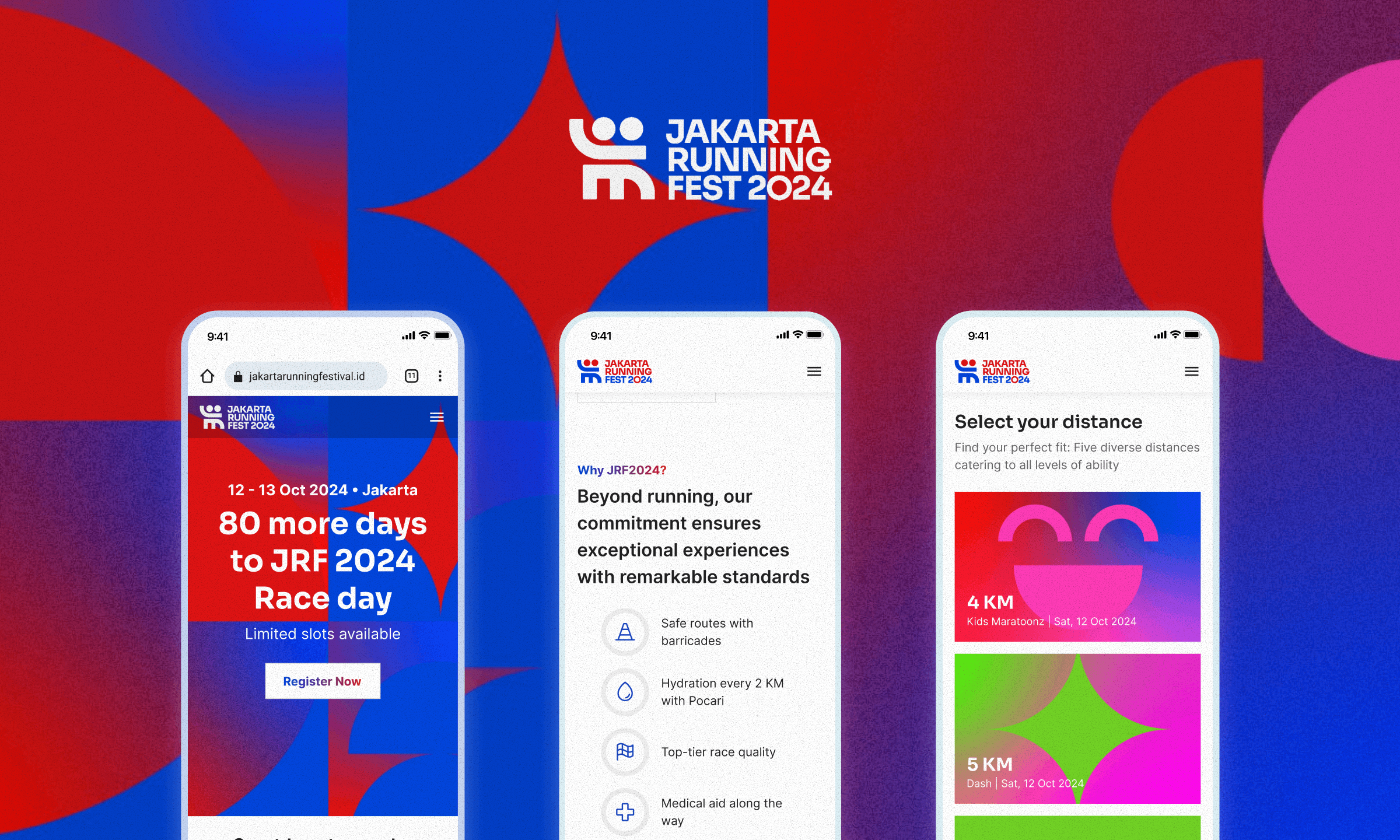

Role
UI/UX Designer
Scope
UX strategy, Information architecture, Web platform, Trust & Credibilty
Timeline
2 weeks
Platform
Responsive website (mobile & desktop)
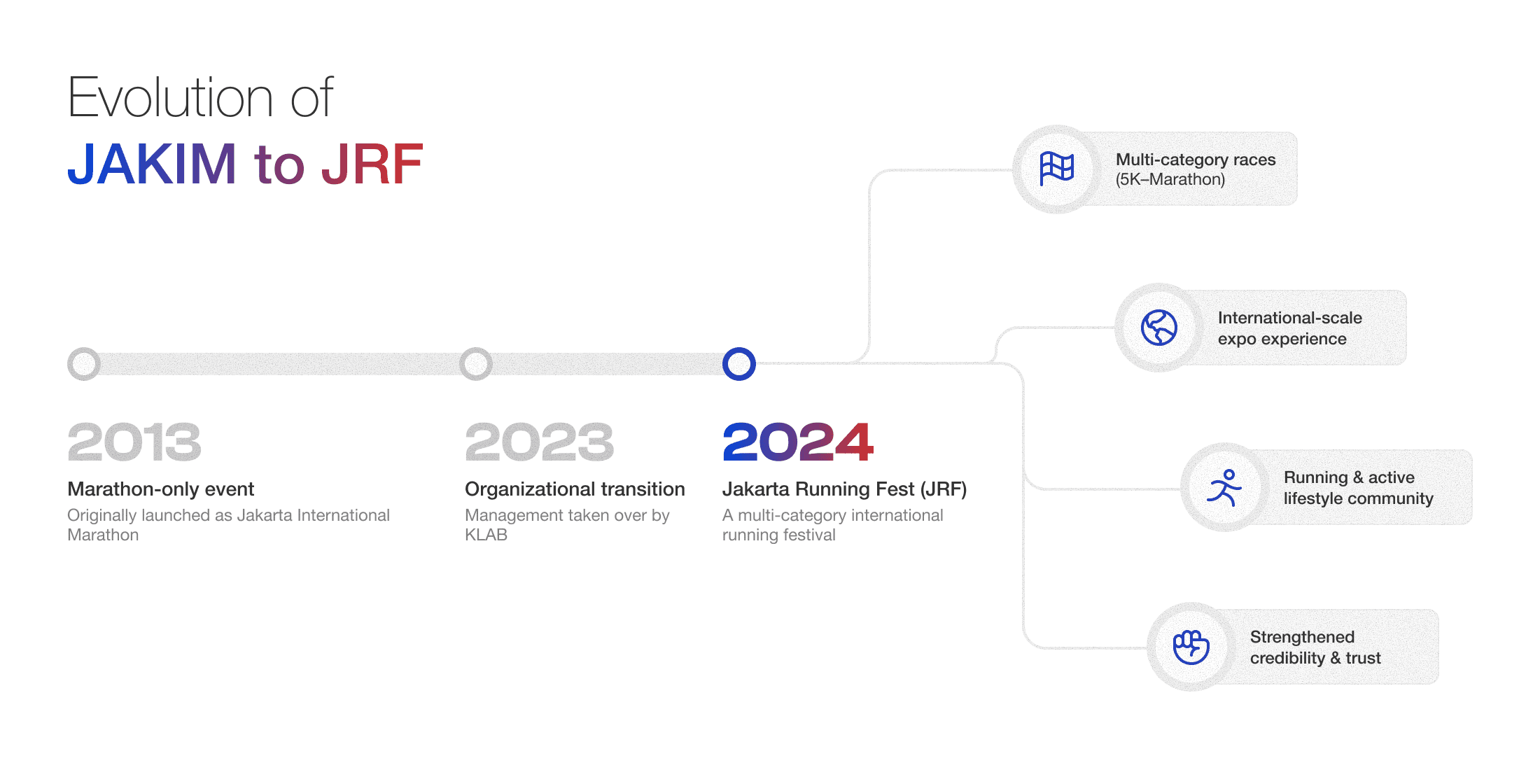
Through this evolution, JRF grew beyond a single marathon event. It became a broader running festival, offering distances from 5K to Marathon, building an active running community, and introducing an international-scale expo experience.
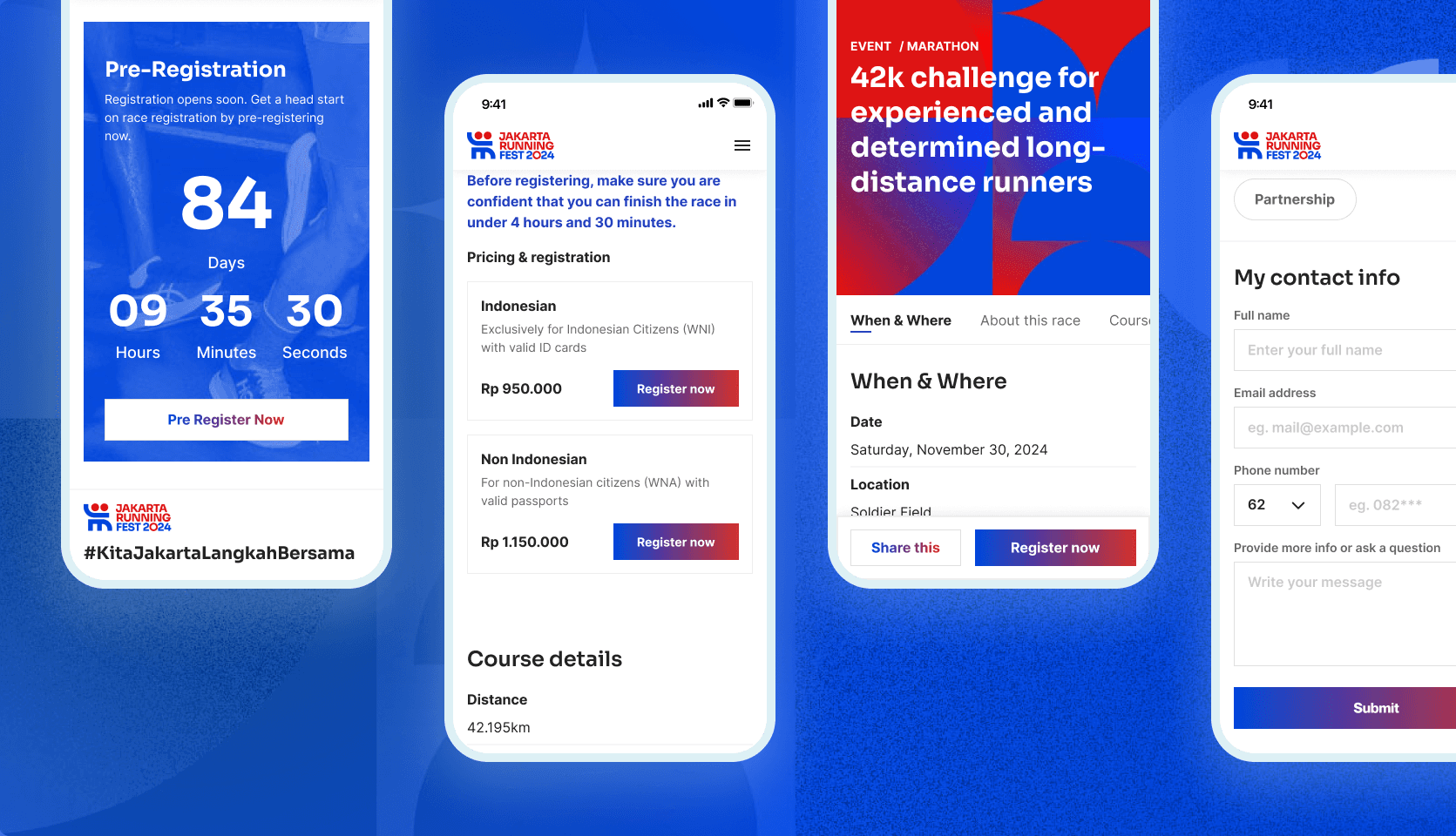
Before buying a ticket, people need to feel confident that the event is real, well-organized, and professionally run.
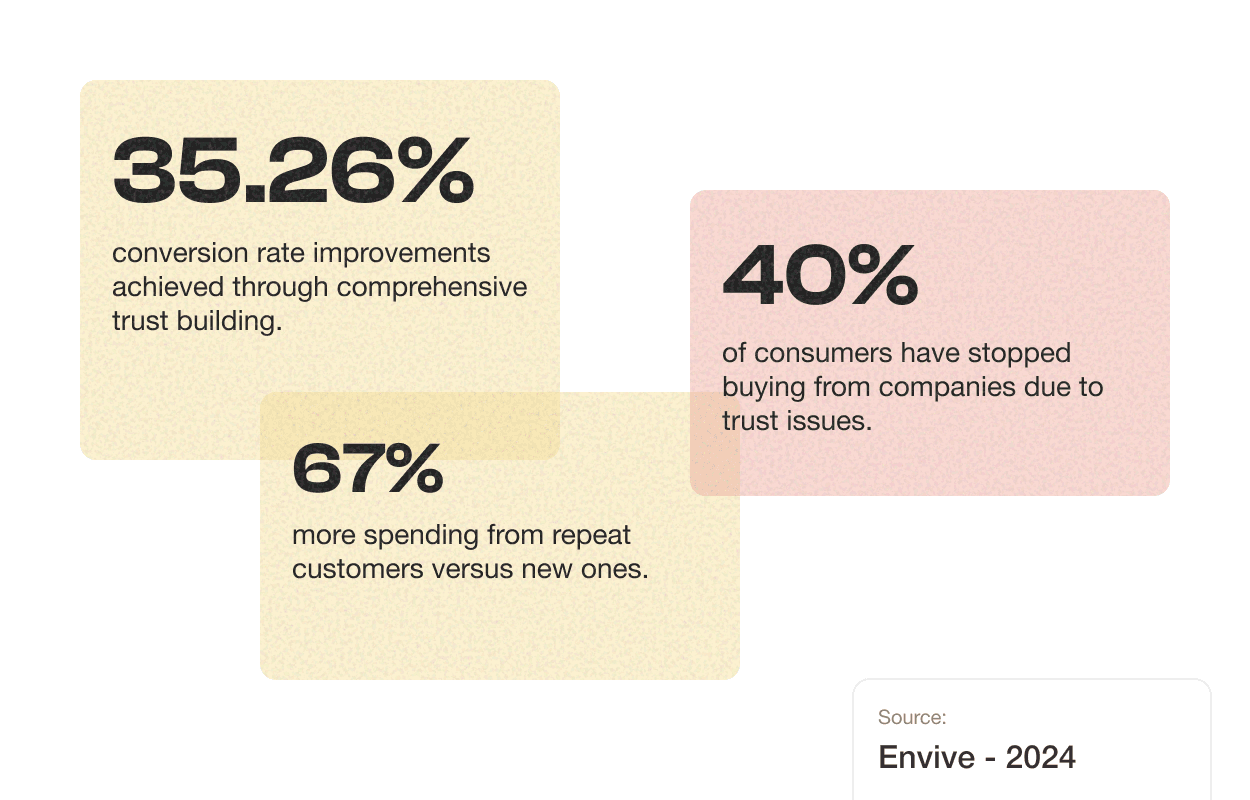
Research also shows that trust directly affects buying decisions. When credibility is unclear, users hesitate or stop altogether. This makes trust a key factor in improving conversion and long-term engagement.
We started with stakeholder interviews involving the event owner and the developer across several sessions. These conversations helped align on business goals, key messages, and what users expect from the event.
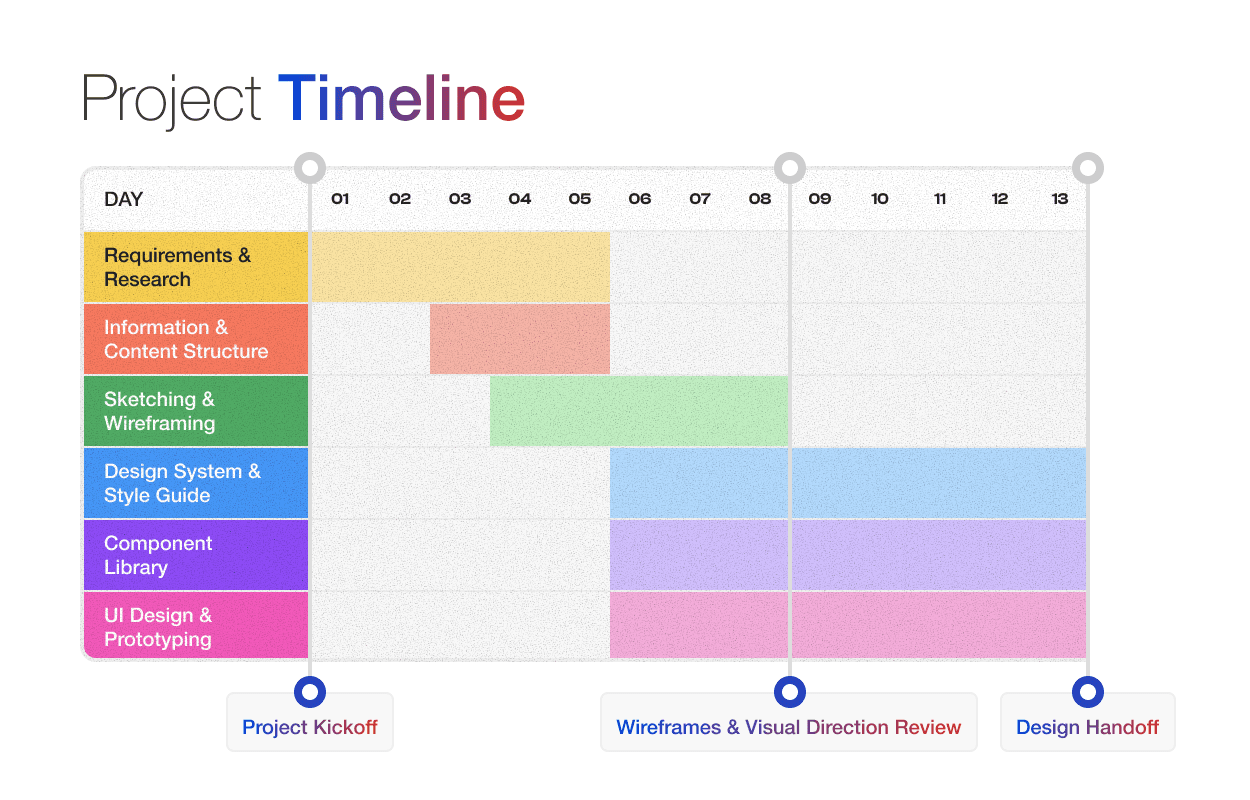
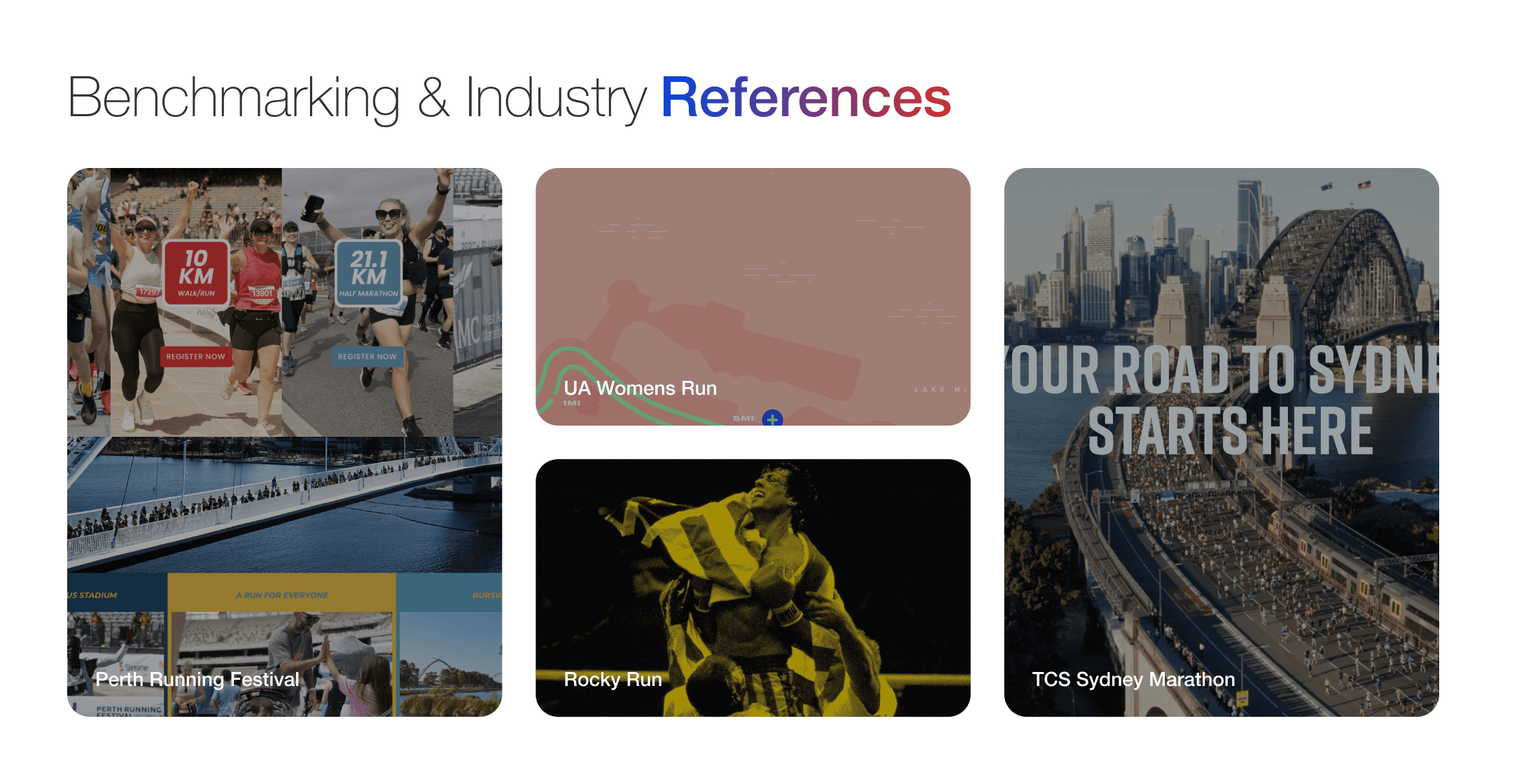
With a tight timeline, we focused on benchmarking international running events. This approach helped us quickly understand common credibility signals, clear information structures, and ticket-focused user flows that work well in similar events.
These insights came from stakeholder input, project limitations, and benchmarking. They helped guide both the strategy and design decisions across the project.
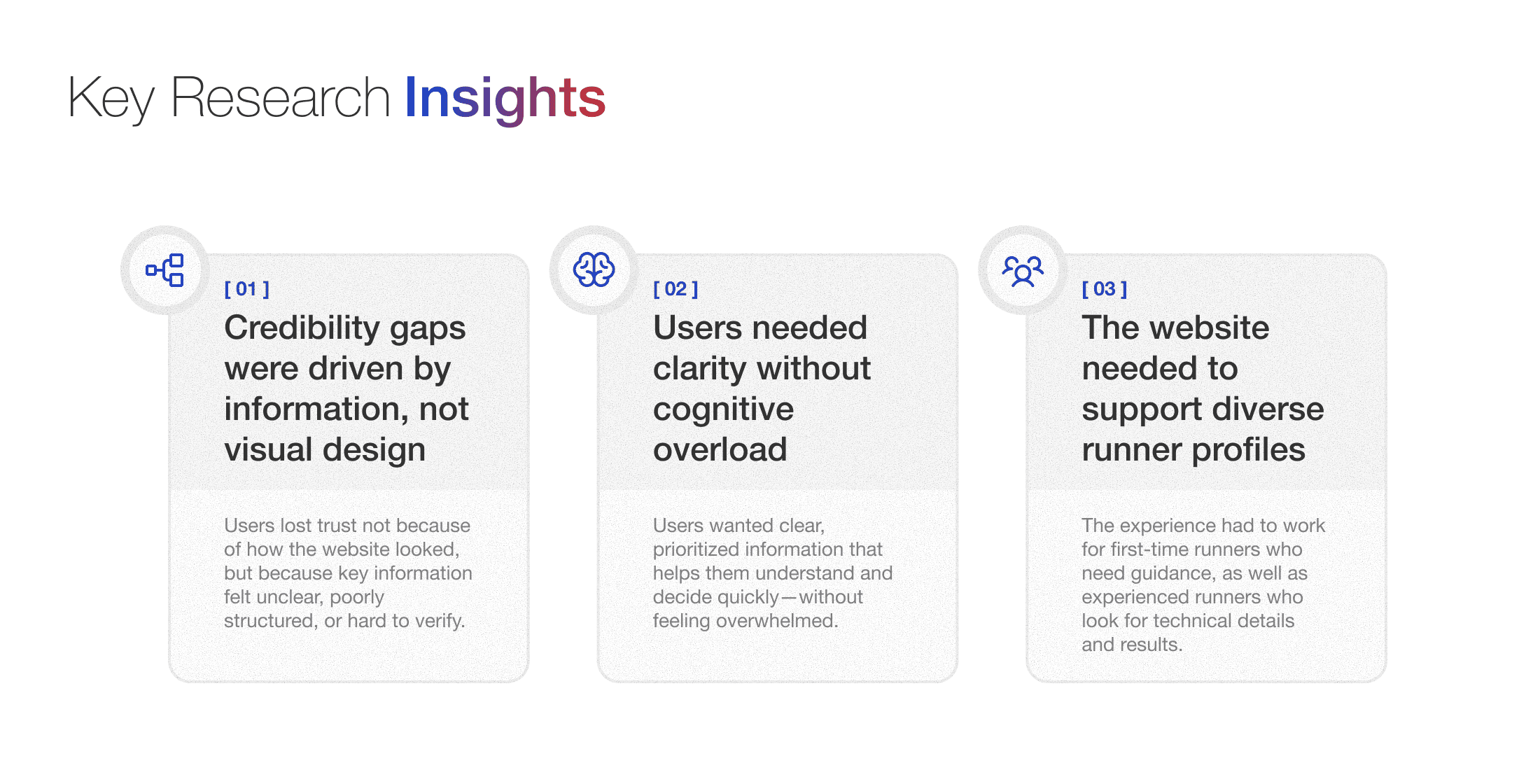
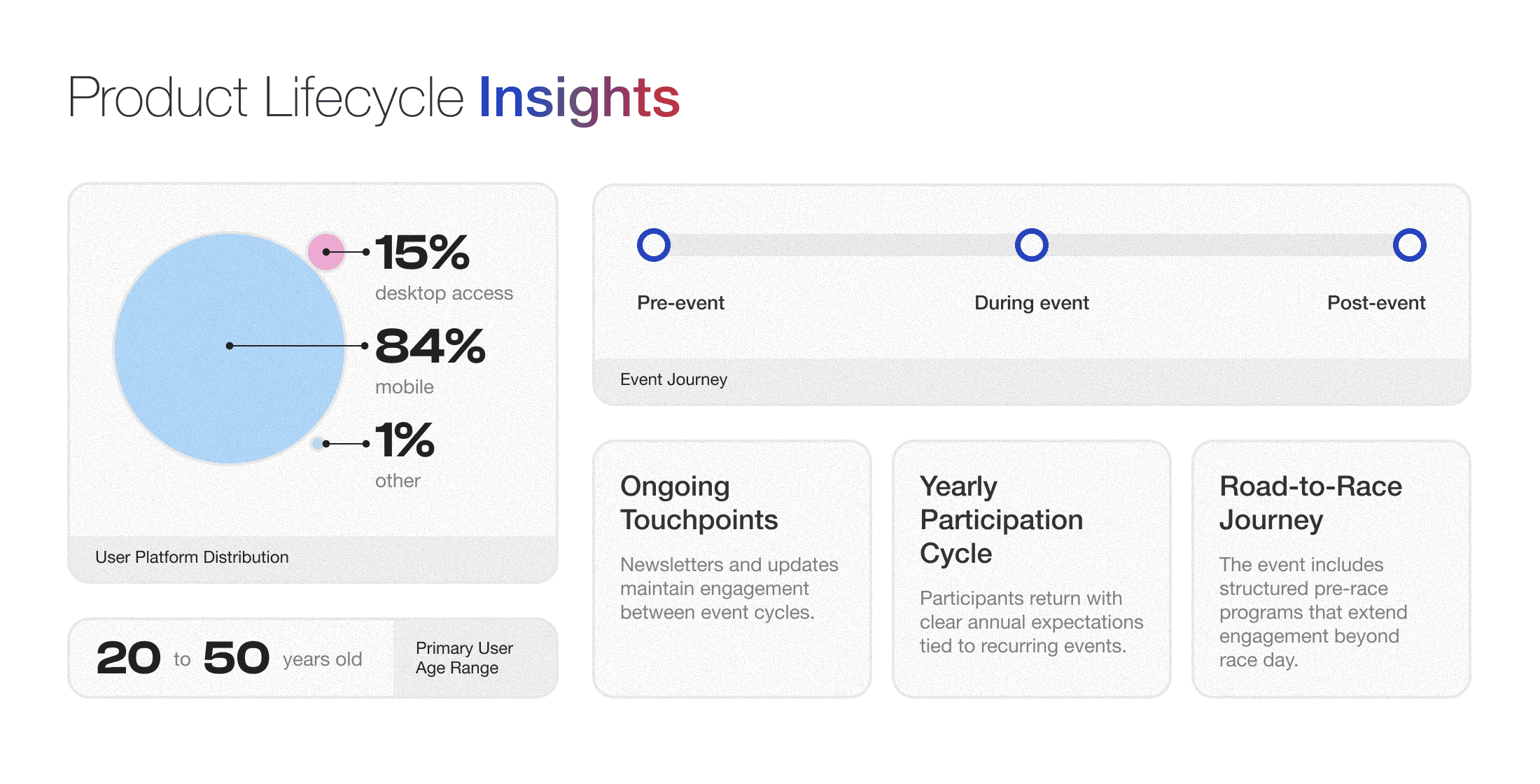
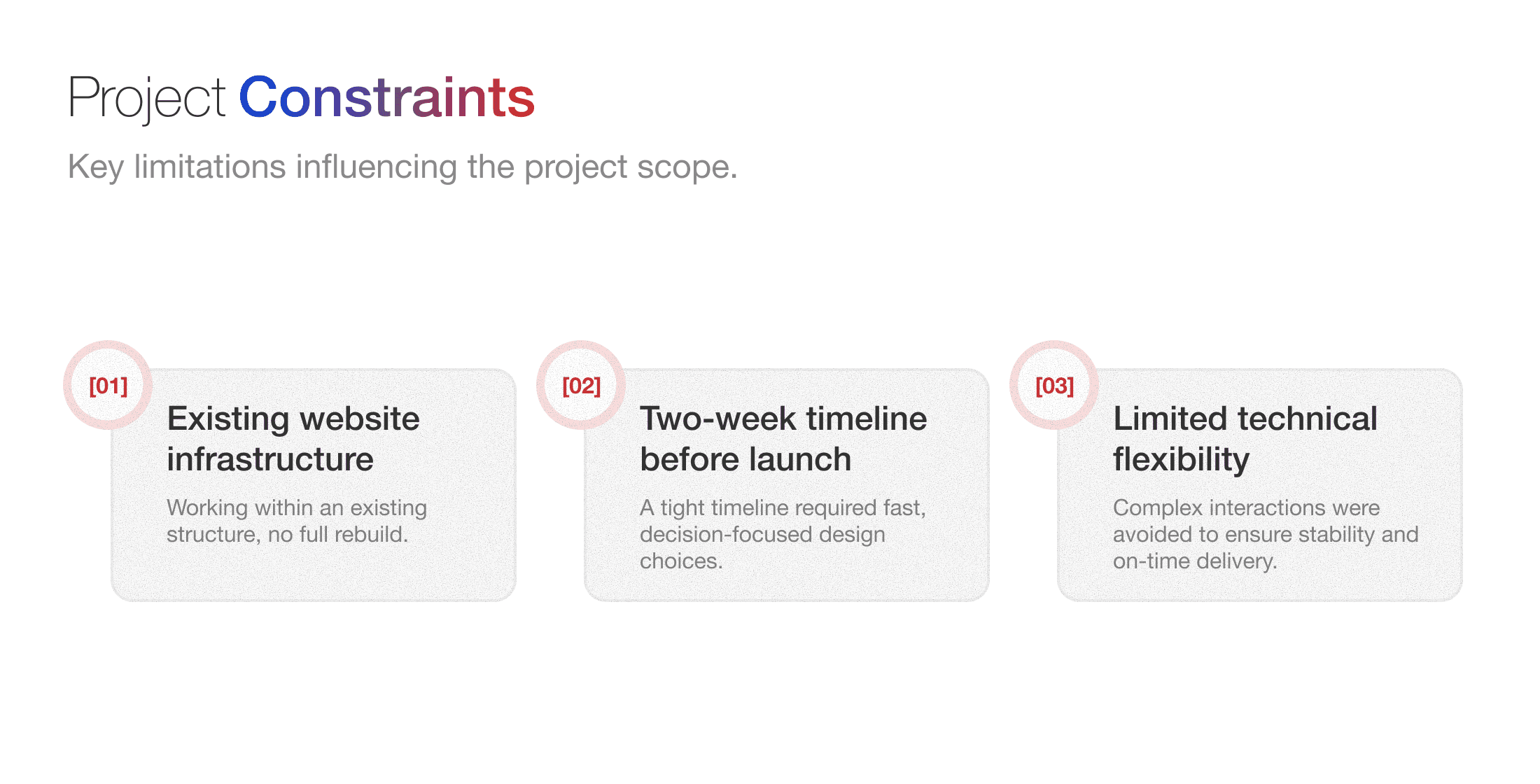
Users faced friction when making decisions because credibility, clarity, and personal relevance were not clear enough. This made it harder for them to commit with confidence.
This insight guided us to explore how the website could better support confident decisions during the consideration stage.
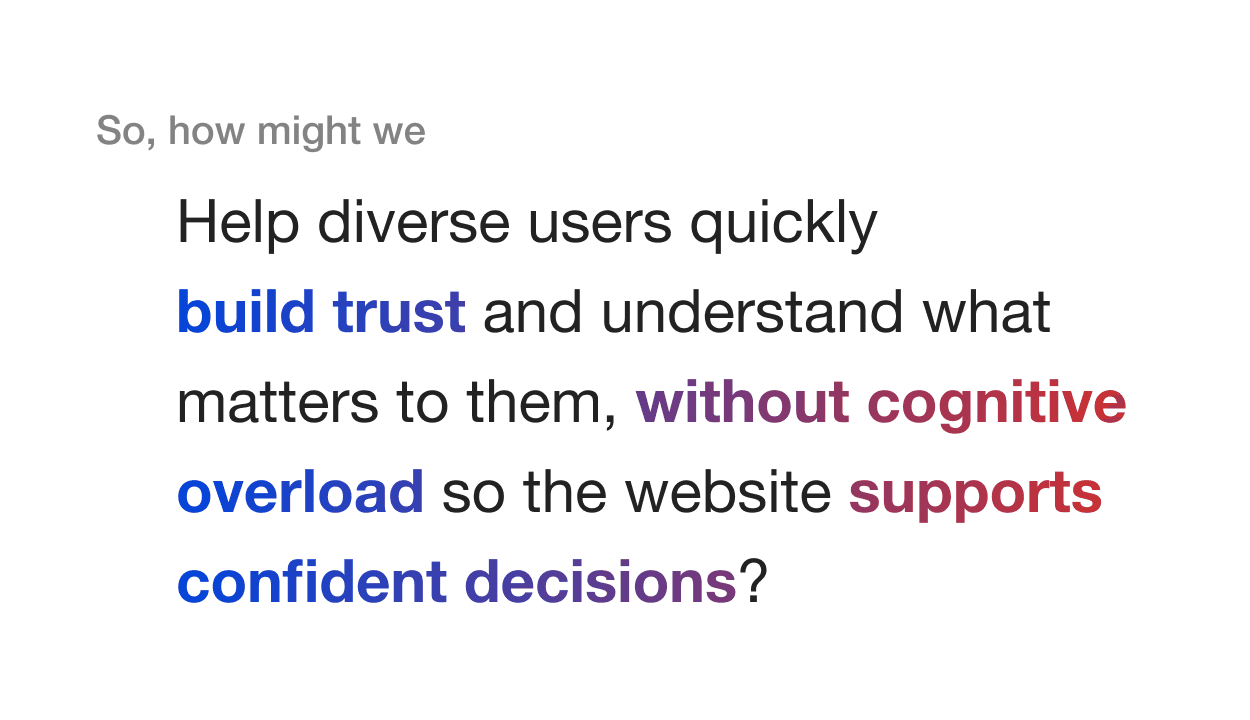
During ideation, I focused on key moments that influence user decisions over time, including retention and long-term engagement. Storyboarding helped visualize how users move from hesitation to confidence at important points in the journey.
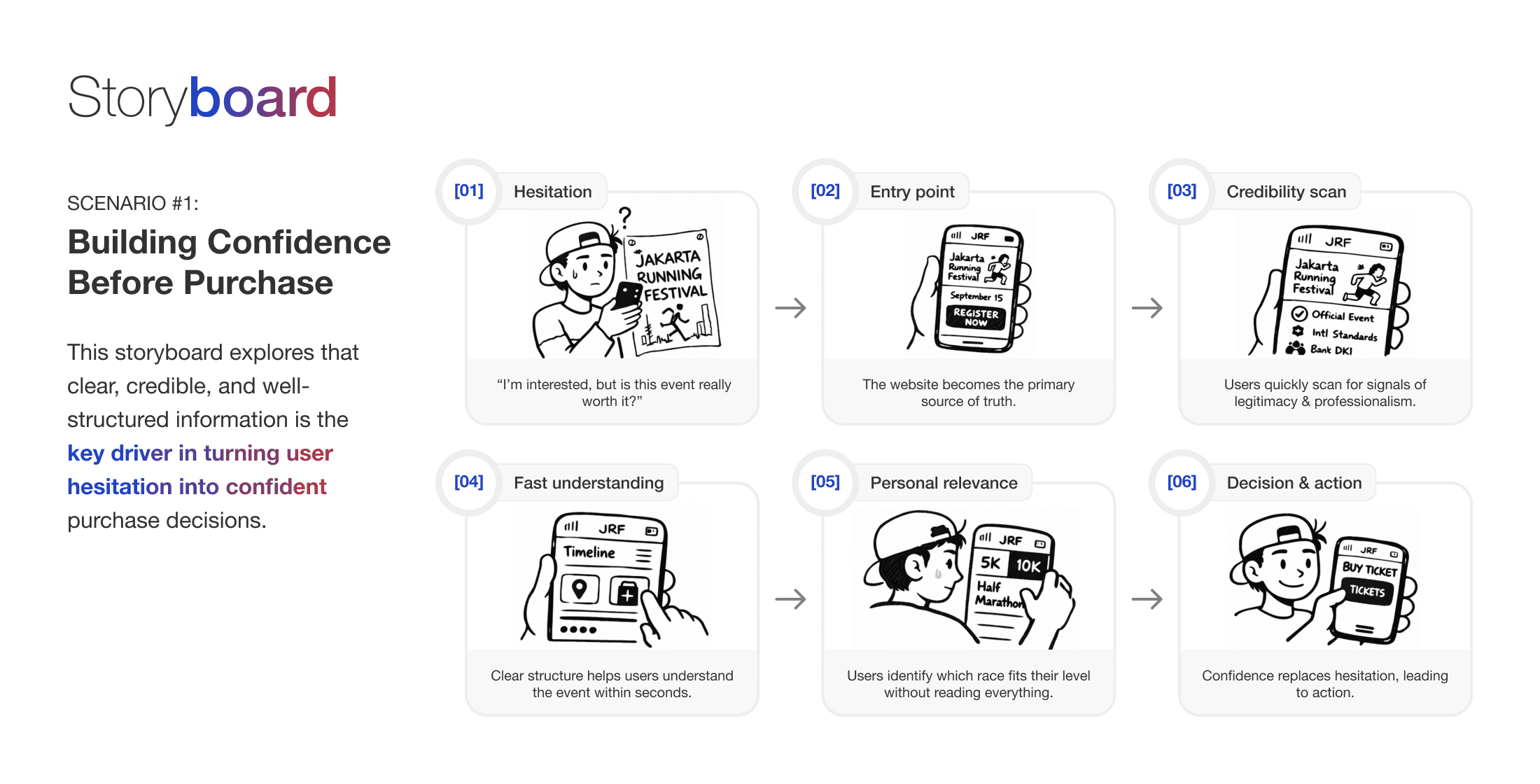
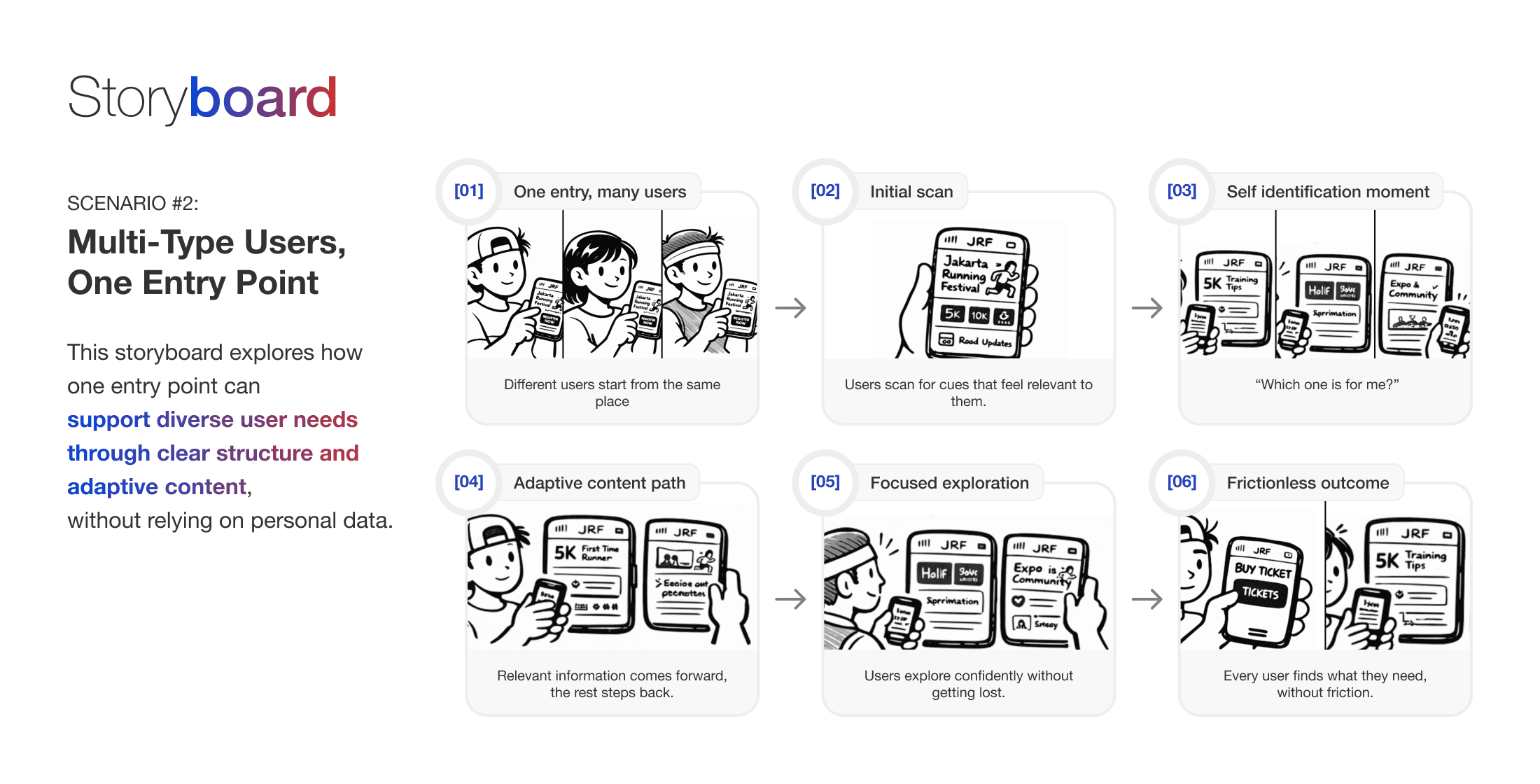
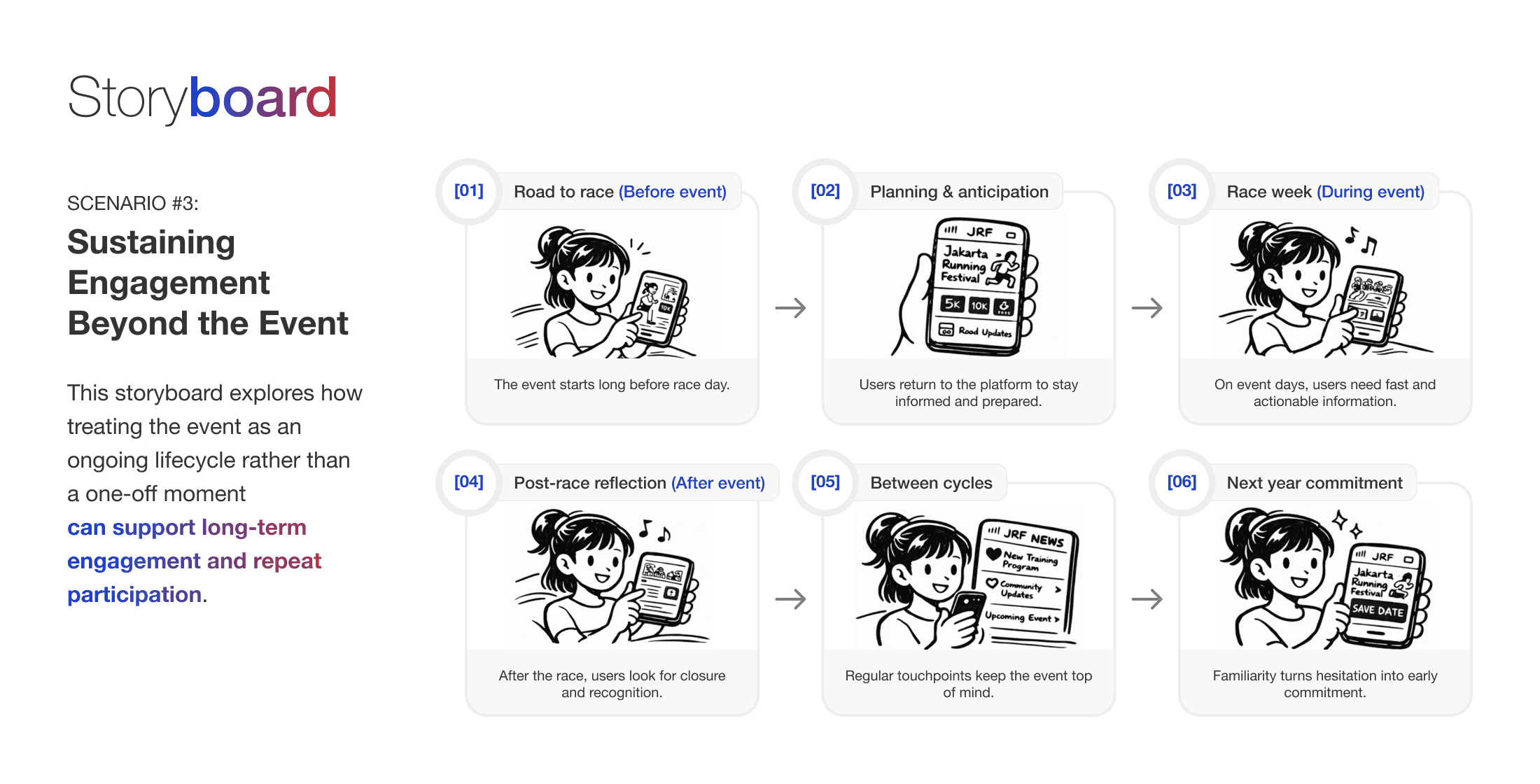
Design efforts focused on:
Overall, design decisions prioritized clarity, trust, and usability rather than visual polish alone.
I restructured the sitemap and created low-fidelity wireframes to establish clear hierarchy and flow before moving into visual solutions.
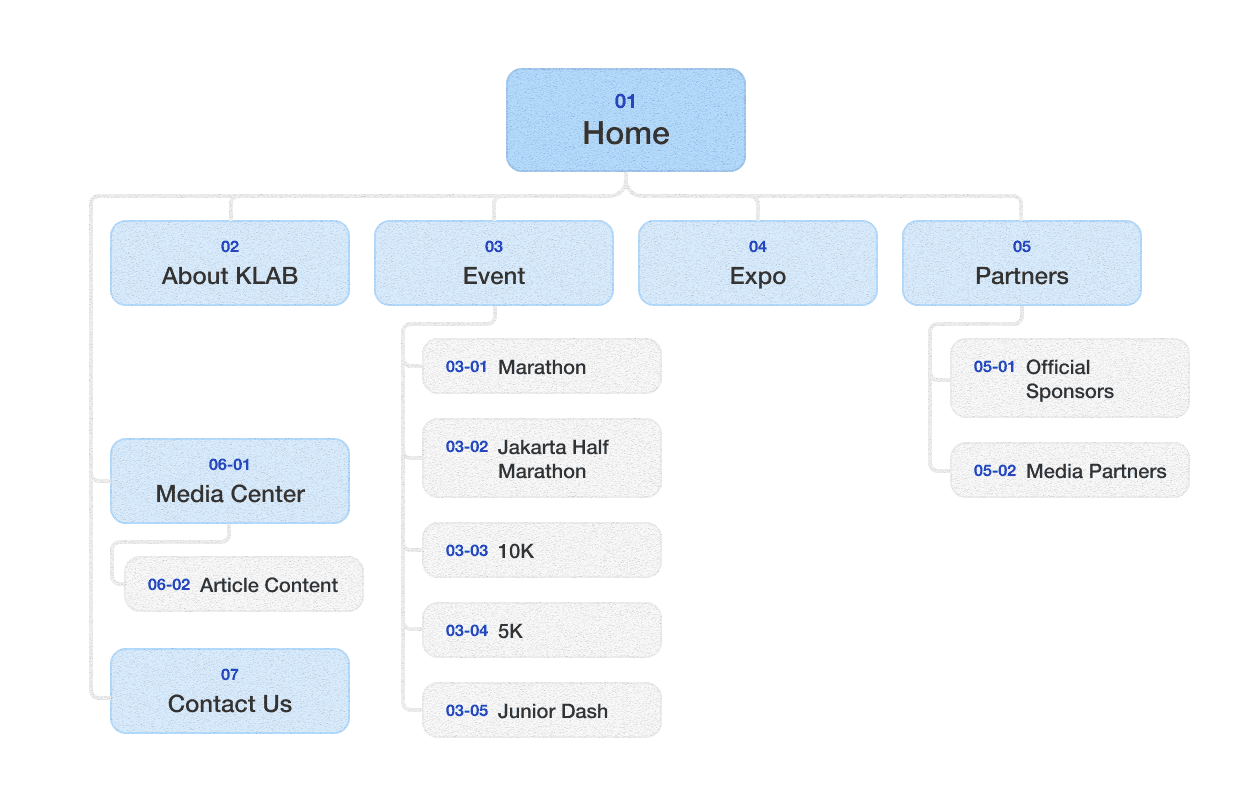
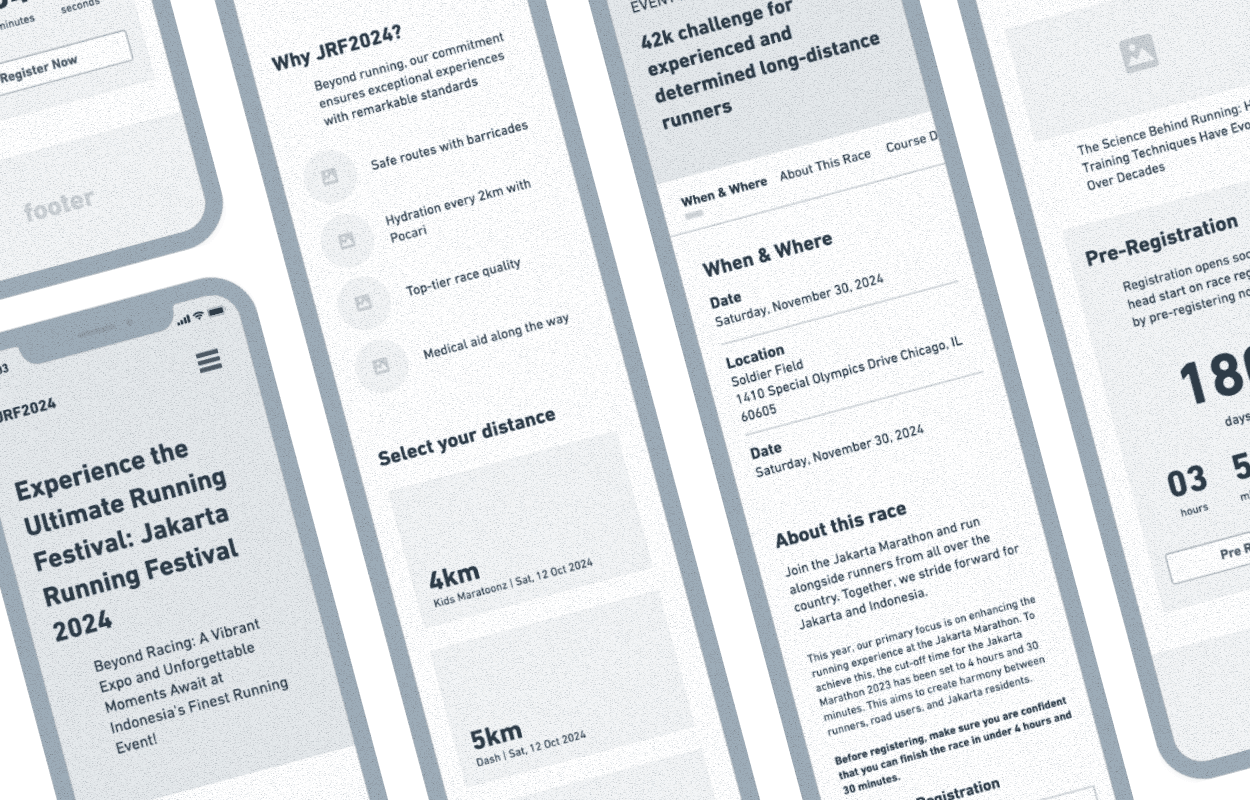
Wireframes were used to validate content hierarchy and user orientation, not visual styling.
Before moving into high-fidelity UI, I defined a visual language to keep the experience consistent across screens. The goal was to create a system that feels cohesive for users and easy for developers to build within existing workflows.
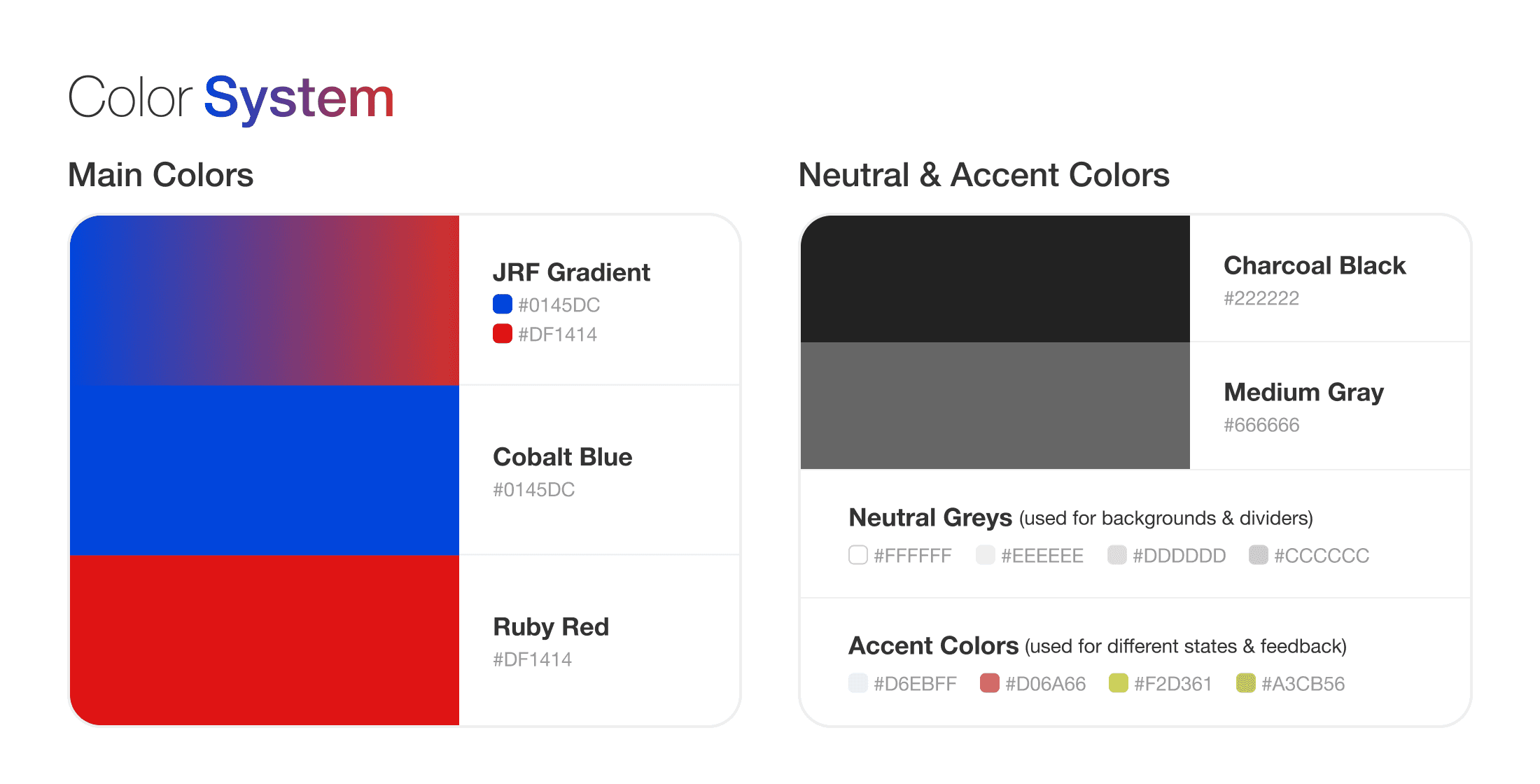
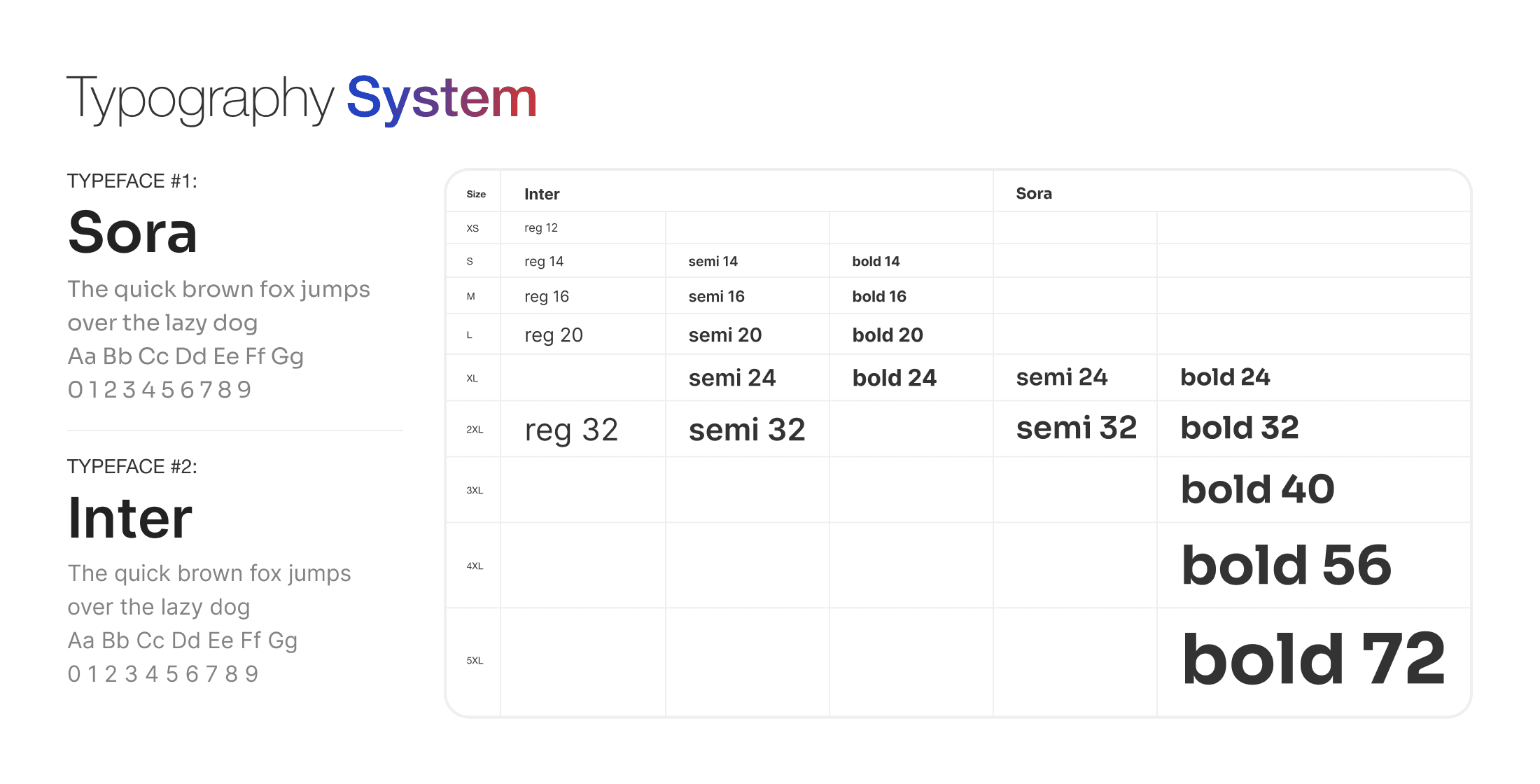
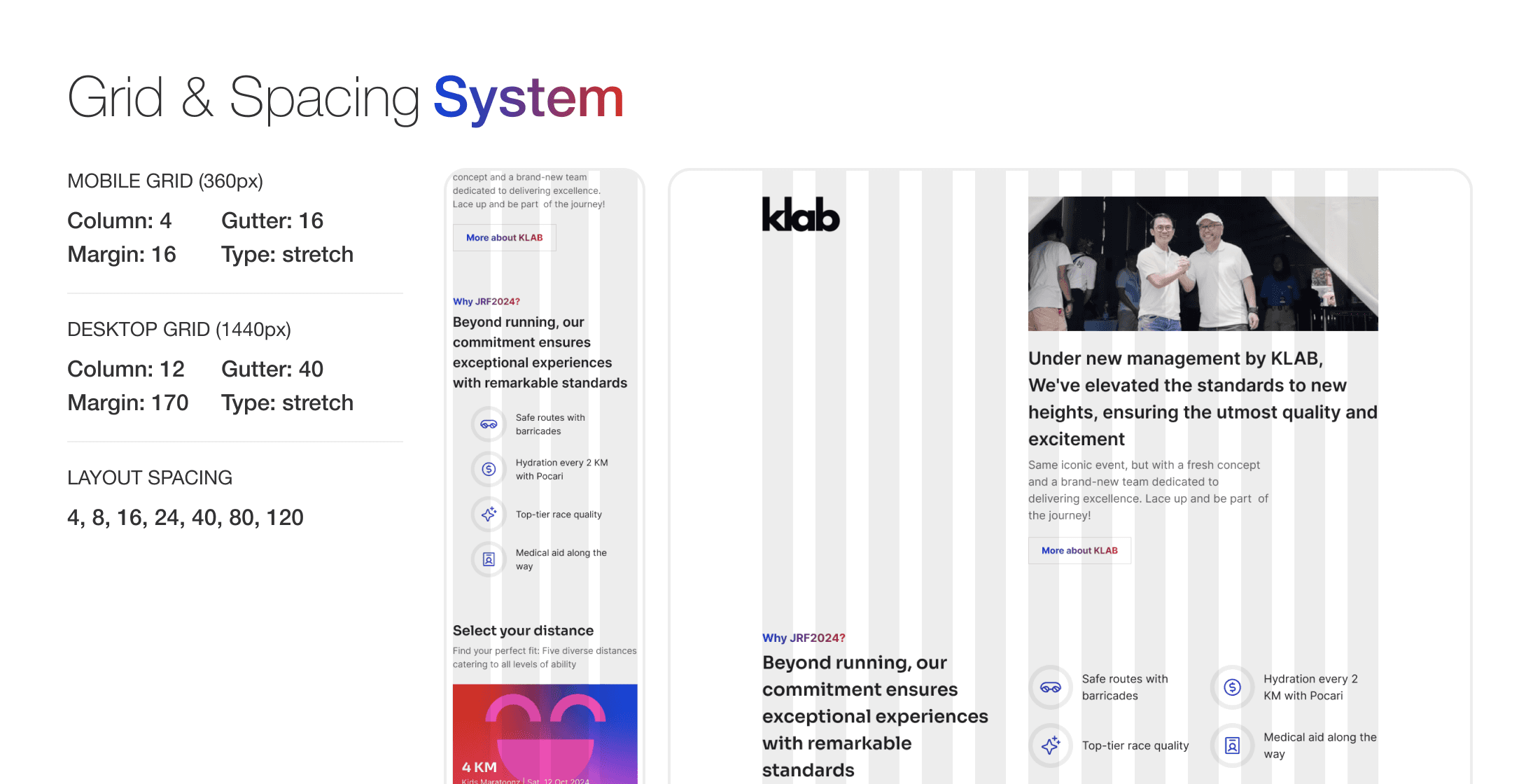
Core UI elements were standardized to reduce visual inconsistency and support faster development. This ensures components behave consistently across different pages and use cases.
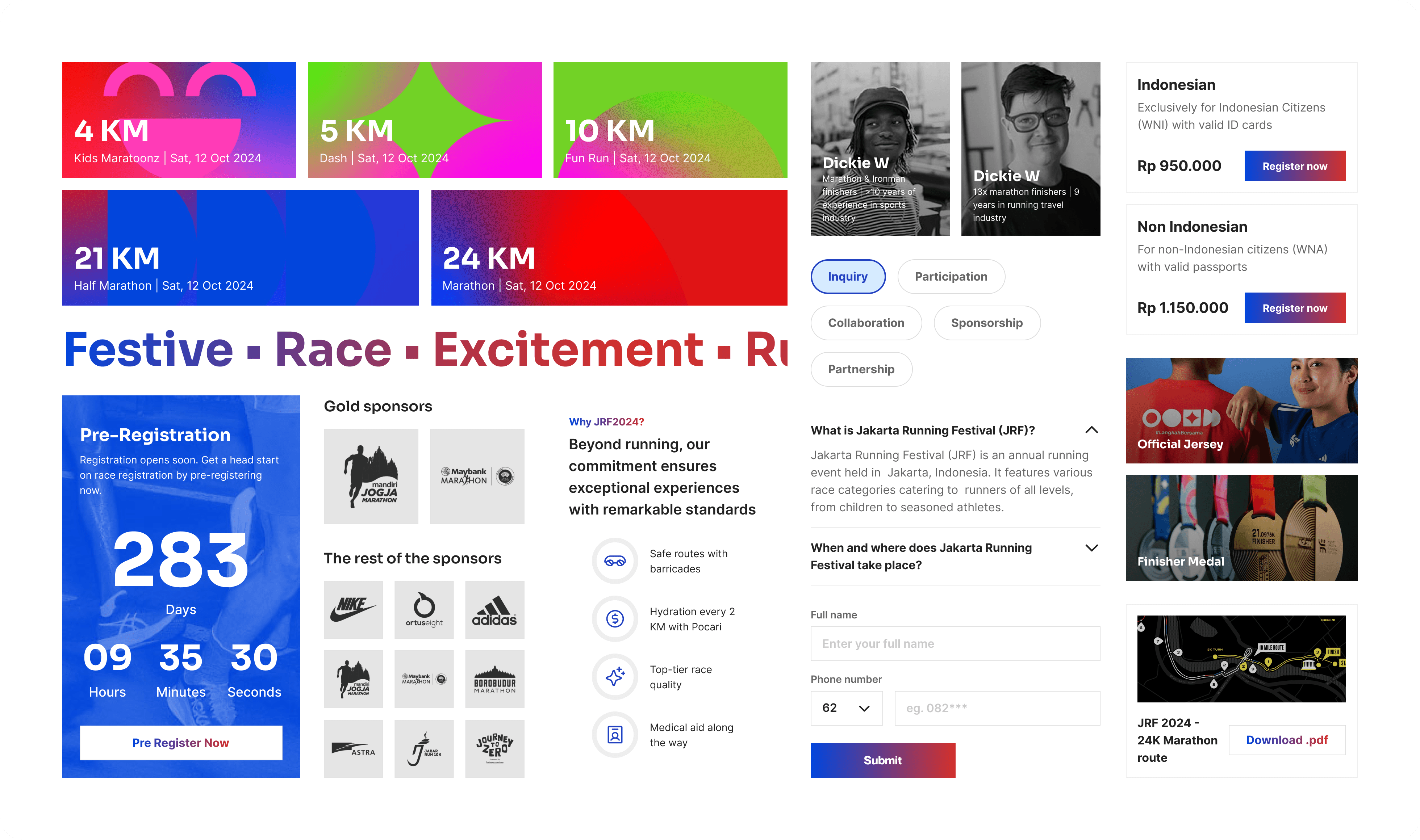
Designed to support clarity, trust, and confident decisions across the user journey. This is how JRF transforms hesitation into commitment. Not through hard selling, but through experience.
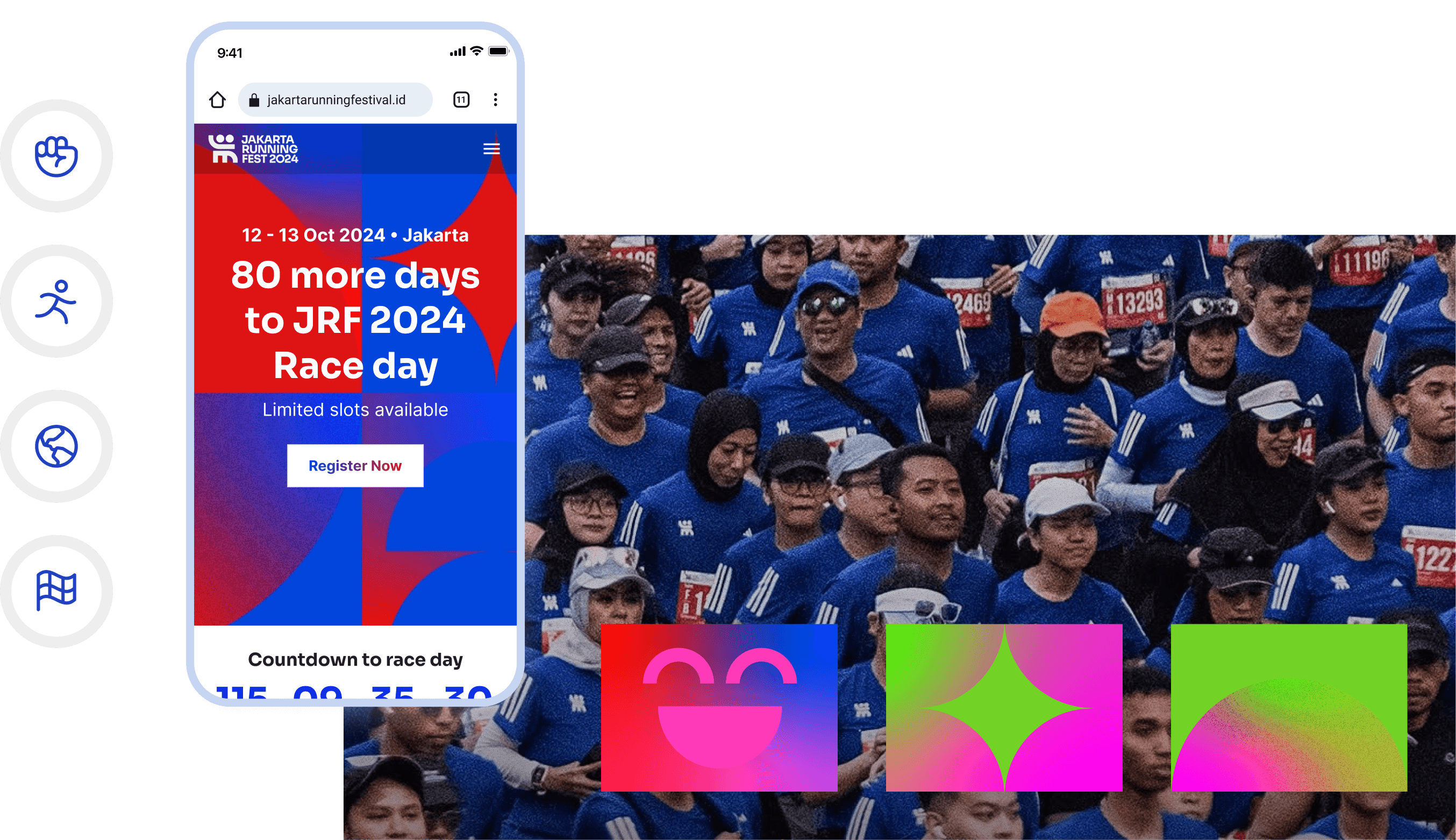
Setting the tone and showing the scale from the very first glance.
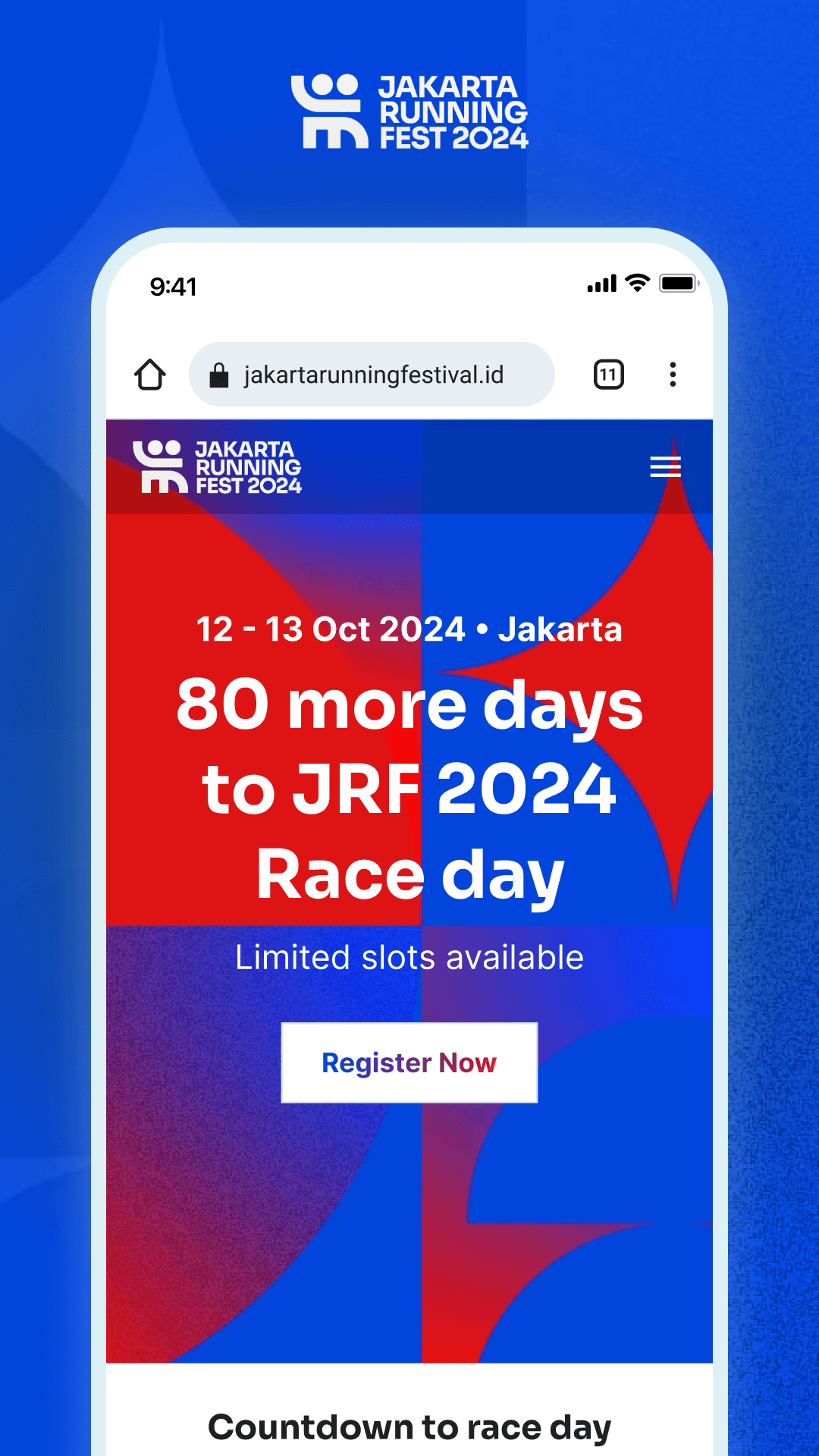
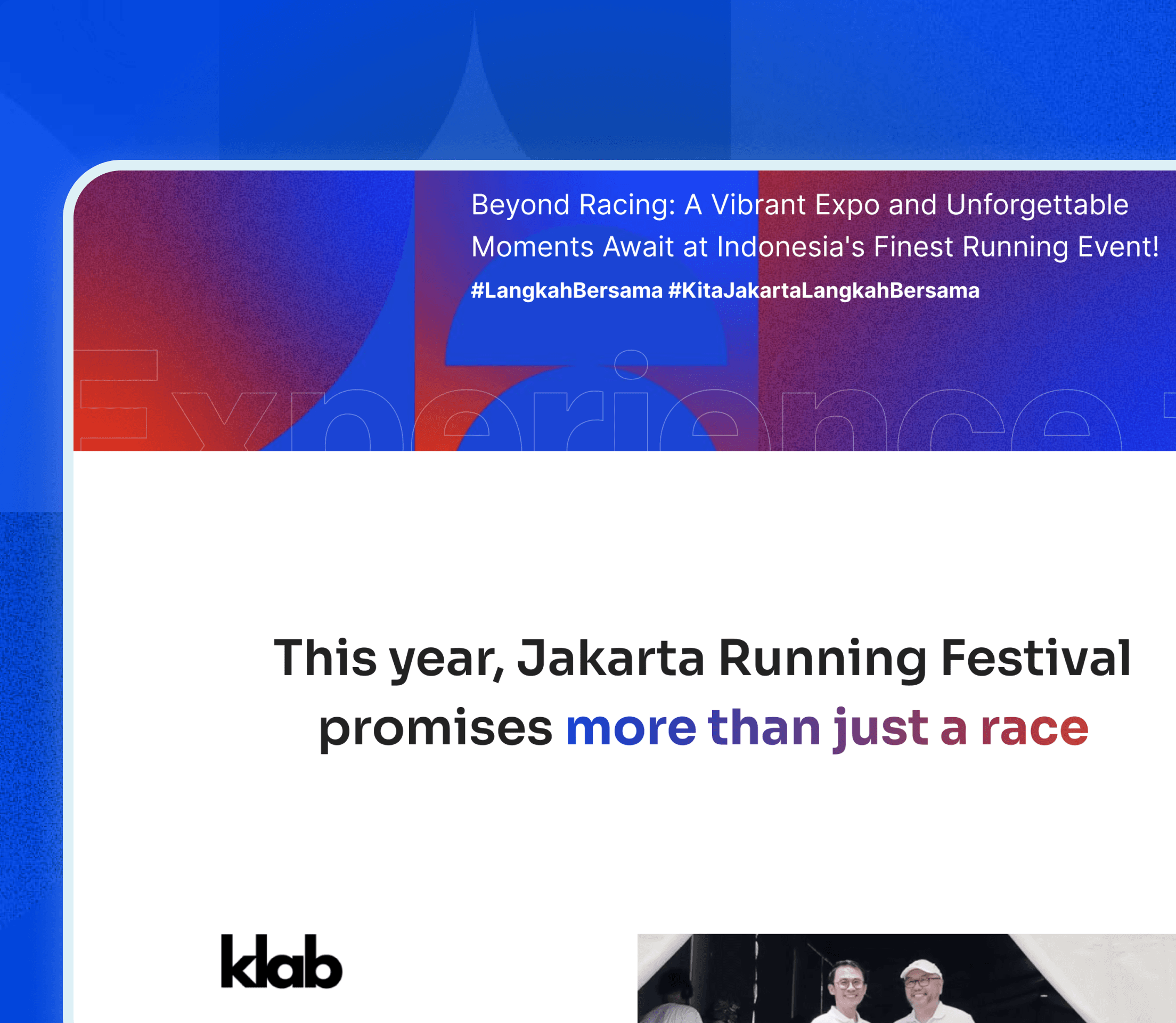
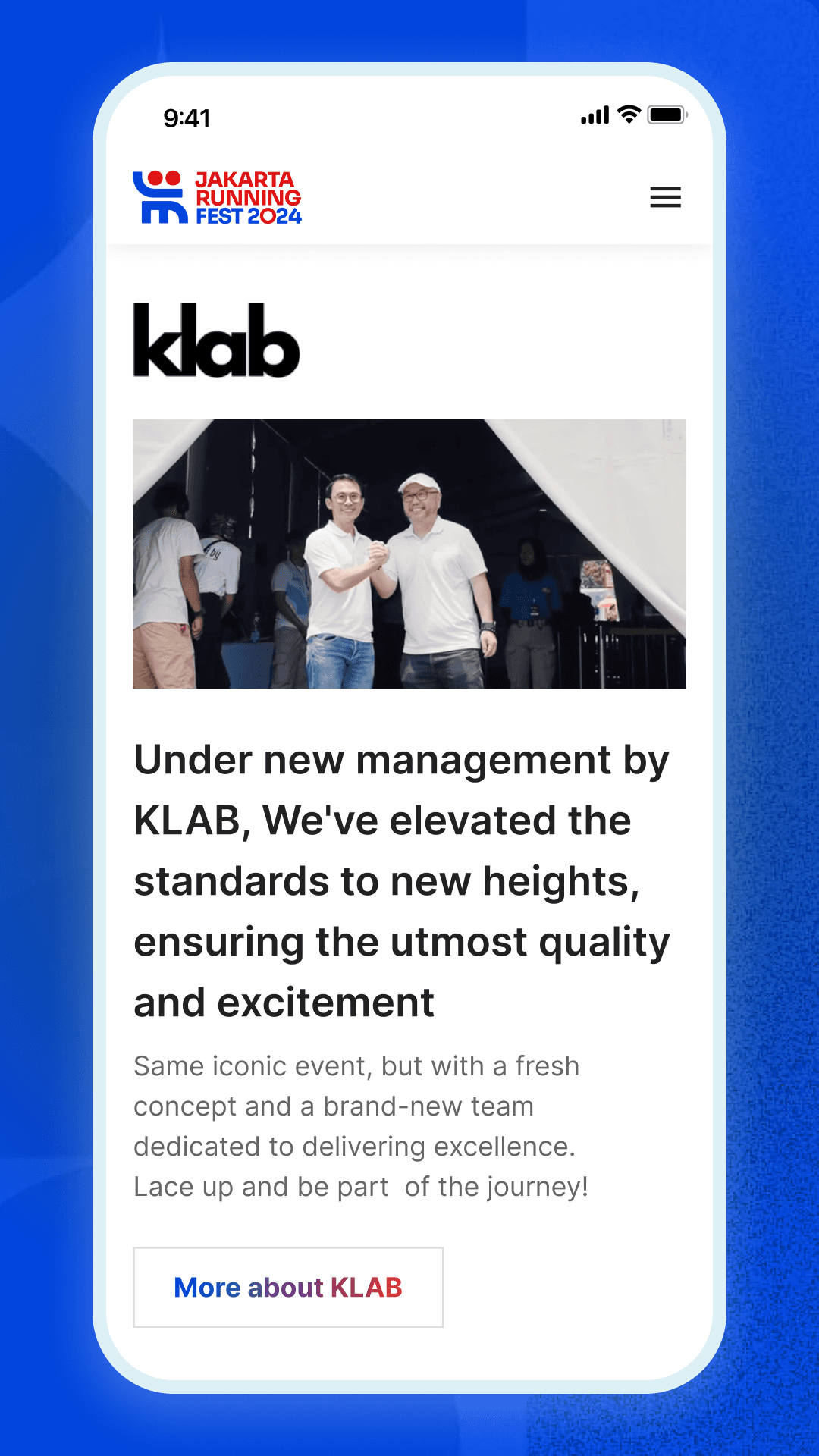
Making it clear who’s behind the event and why it’s credible.
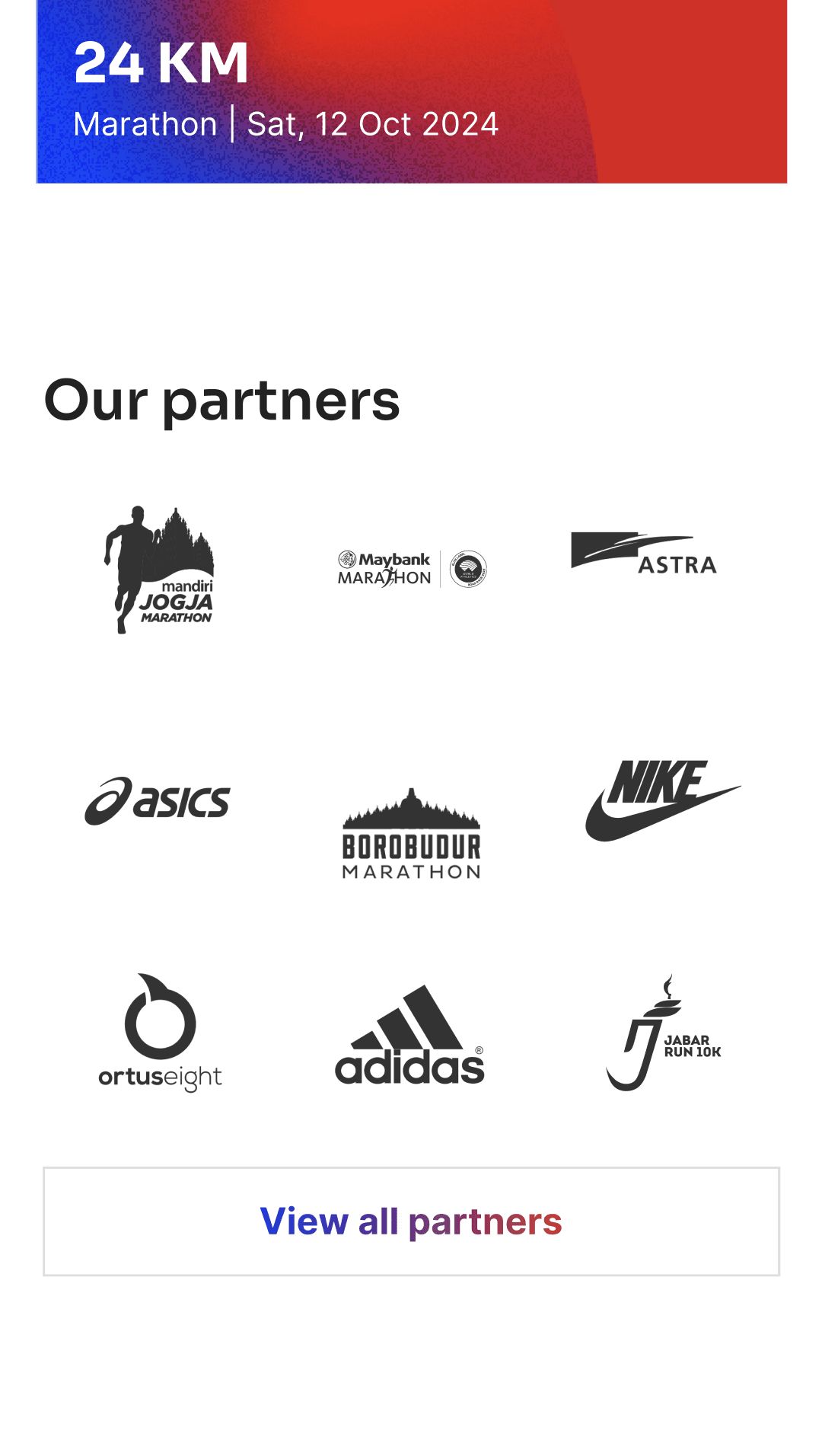
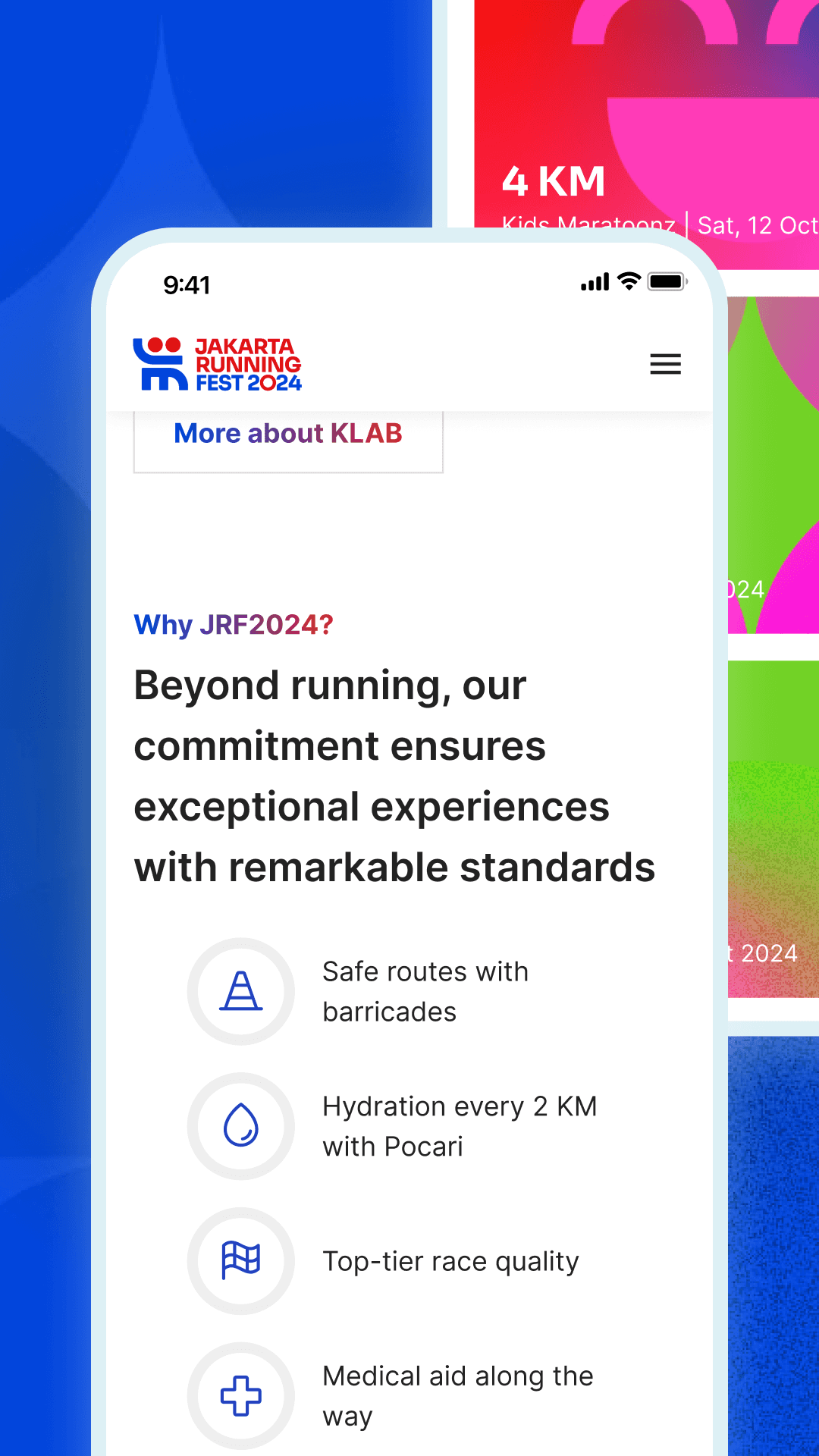
Helping users grasp key event details quickly, without the overload.
Letting users instantly recognize which race fits their level.
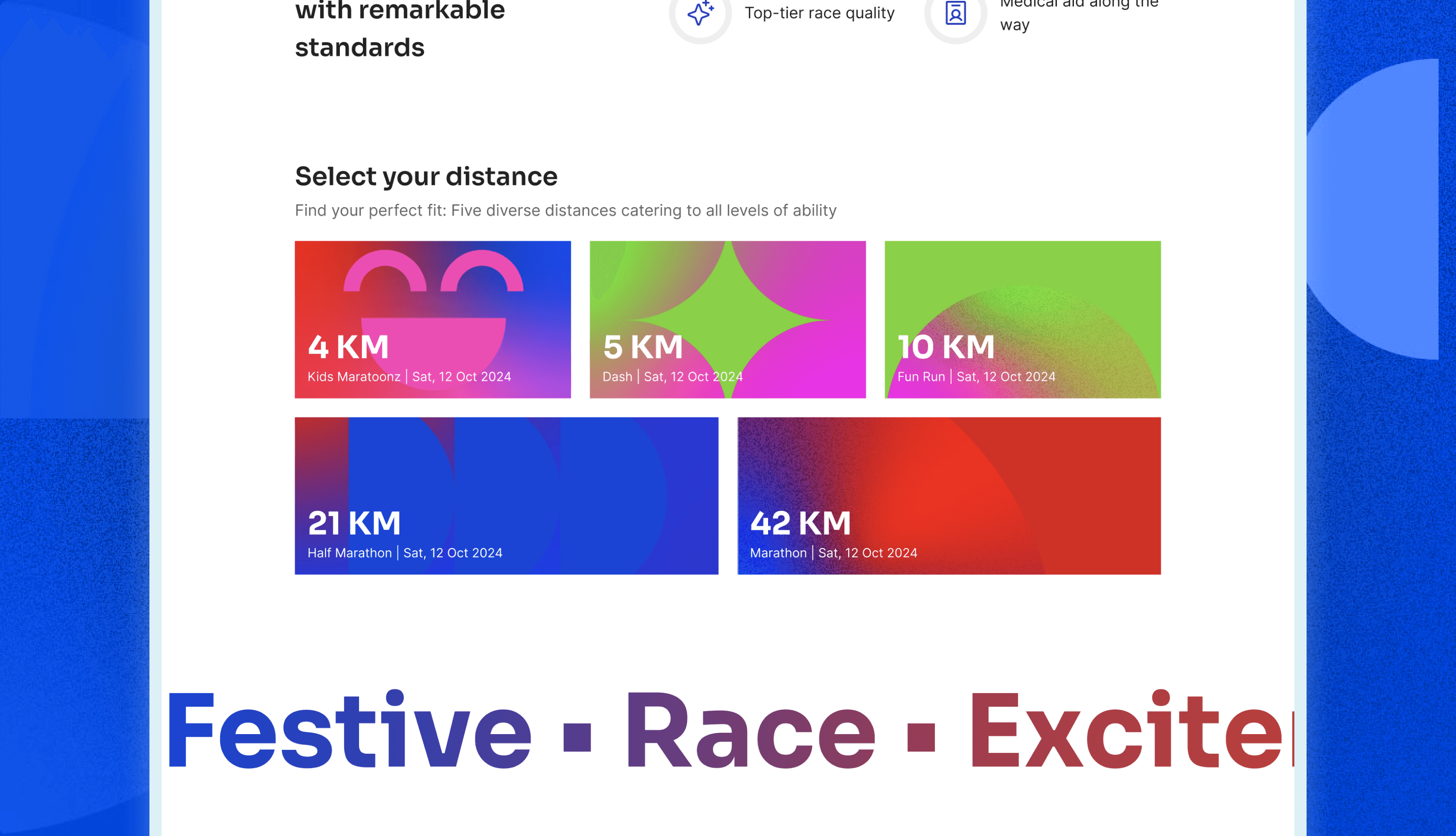
Extending the experience before and after the event.
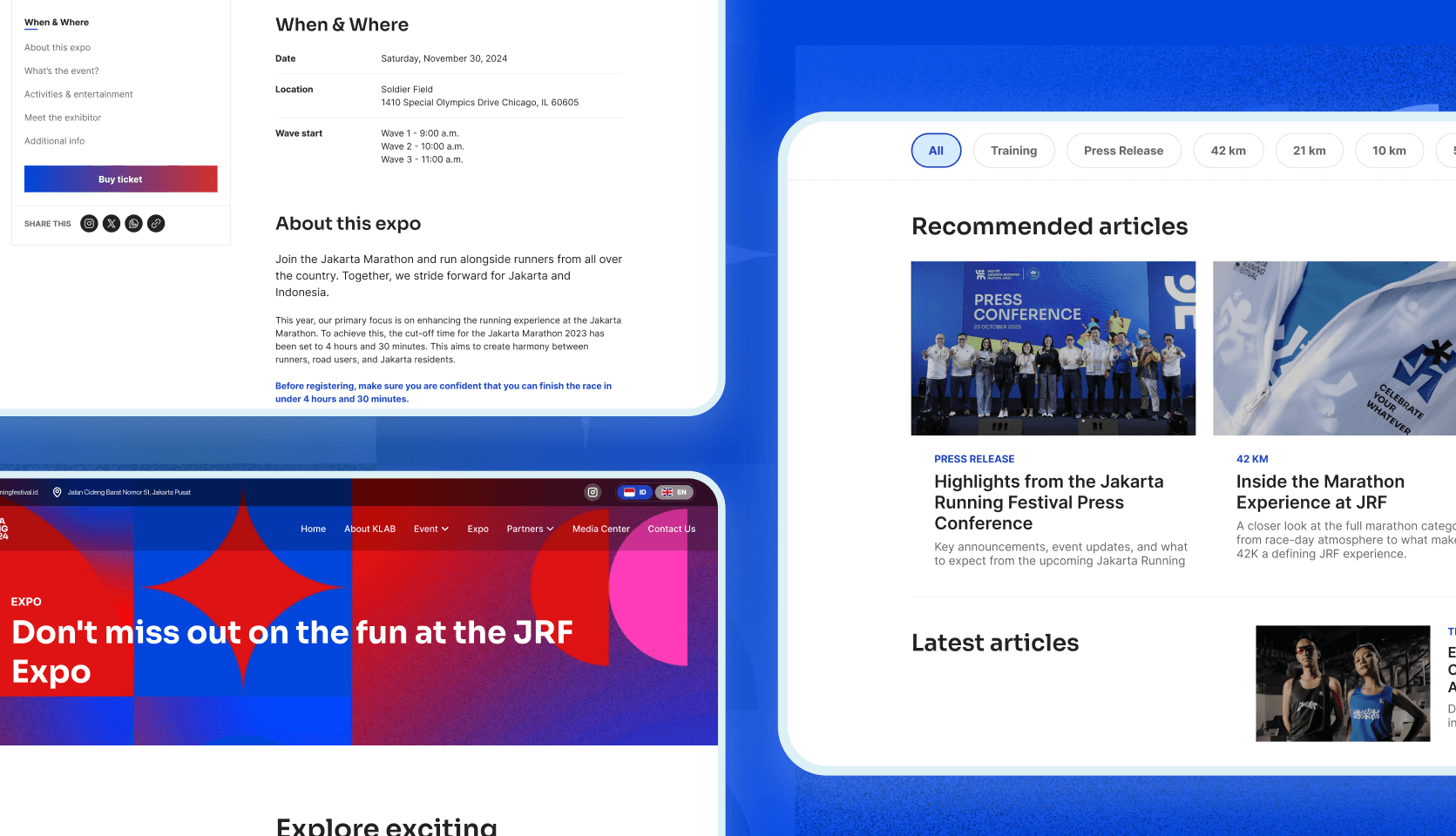
Supporting decisions without pressure or hard selling.
By reframing the website as a confidence-building tool rather than a sales surface, this project focused on reducing hesitation at key decision moments. The outcomes below reflect design intent and early directional impact, not final performance metrics.
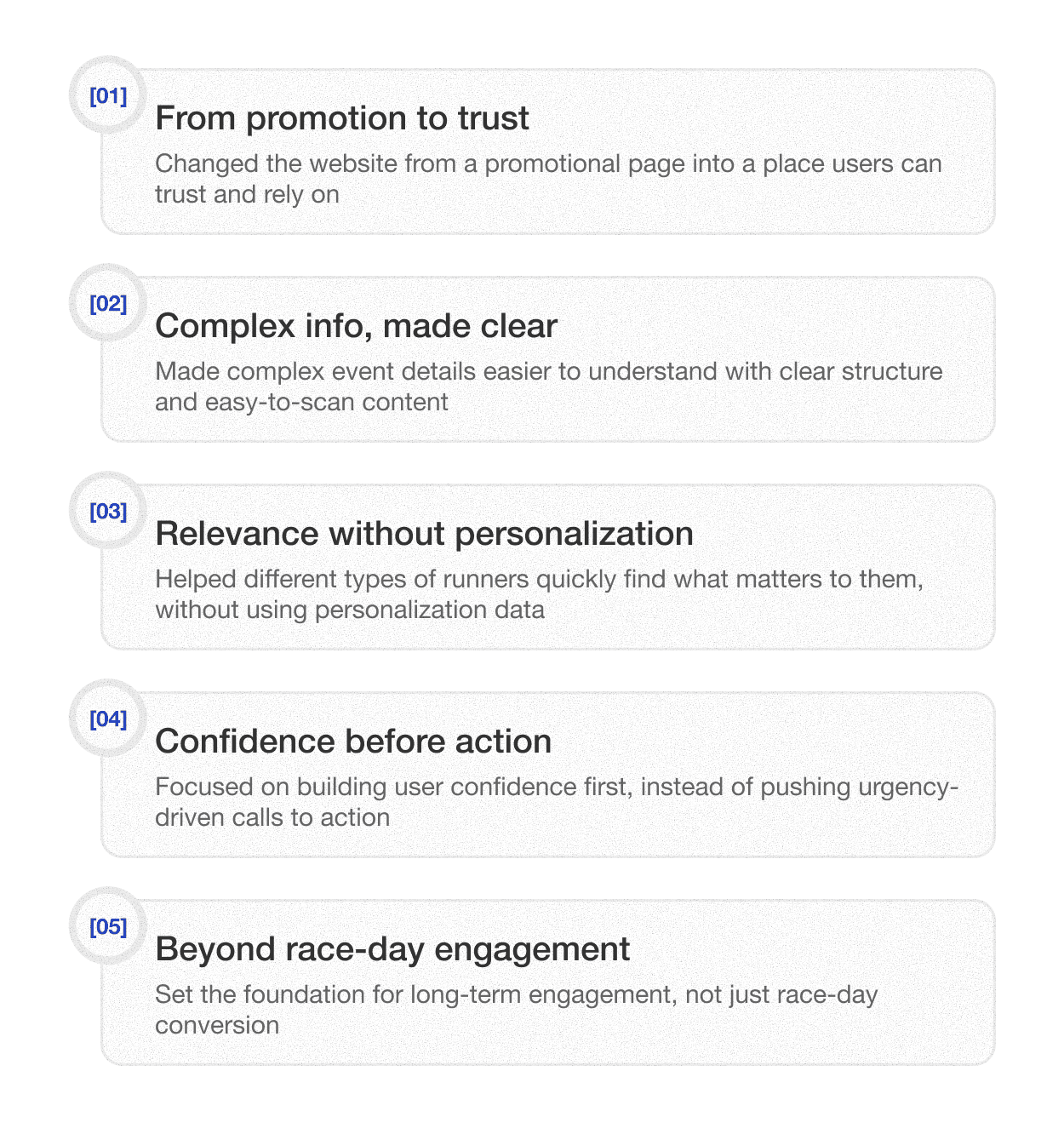
This project showed me that hesitation often comes from uncertainty, not a lack of interest. When information is clear and transparent, trust can form naturally without relying on visual polish or pushy prompts.
I also learned that supporting different users doesn’t always require heavy personalization. Sometimes, a clear and thoughtful structure is enough to help people find what matters to them.
Most importantly, good design builds confidence by quietly guiding decisions, not by pushing users to act.