Role
Scope
Timeline
Platform
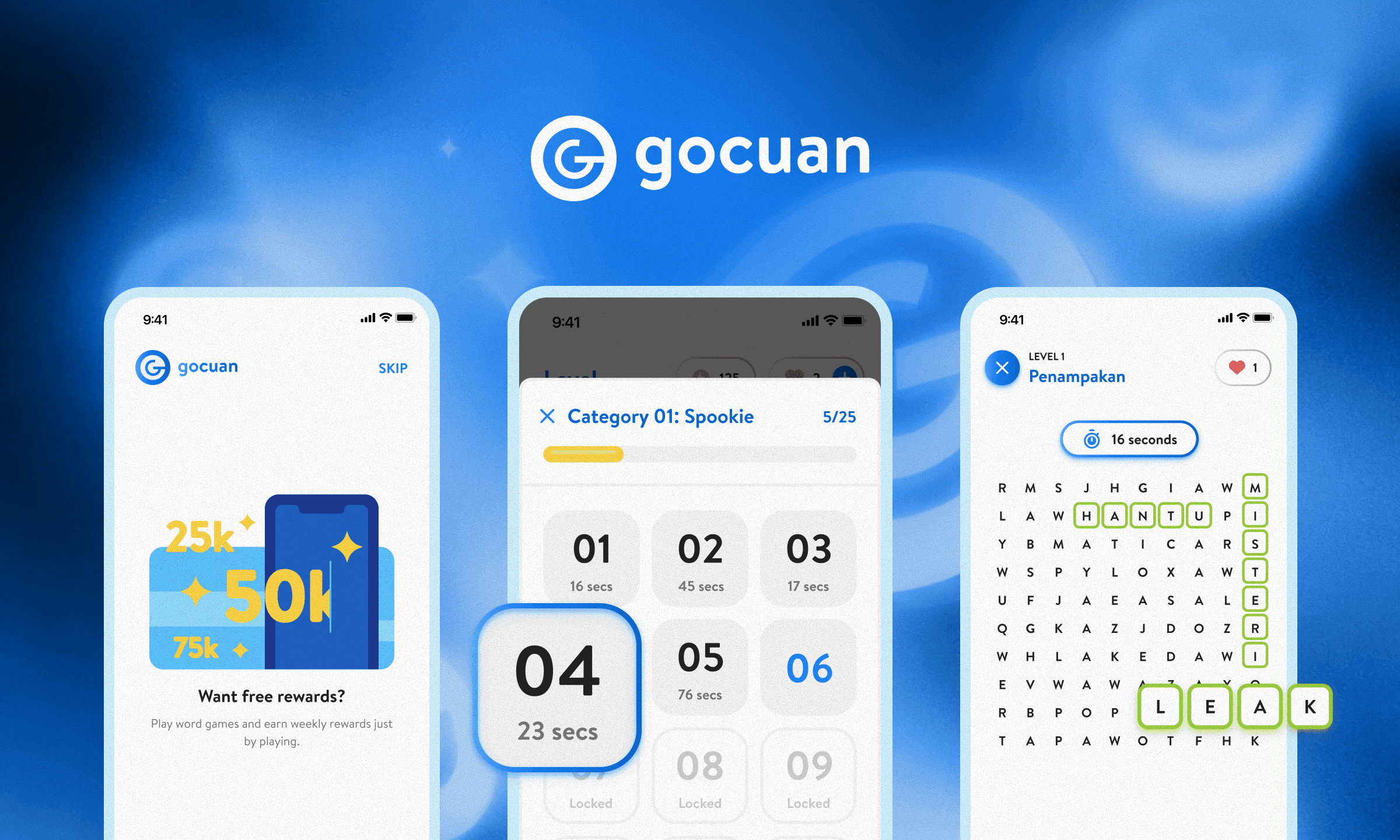
Gocuan is a word-based mobile game that turns ads into part of the gameplay. Users earn rewards by playing short word challenges, where watching ads is part of the experience.
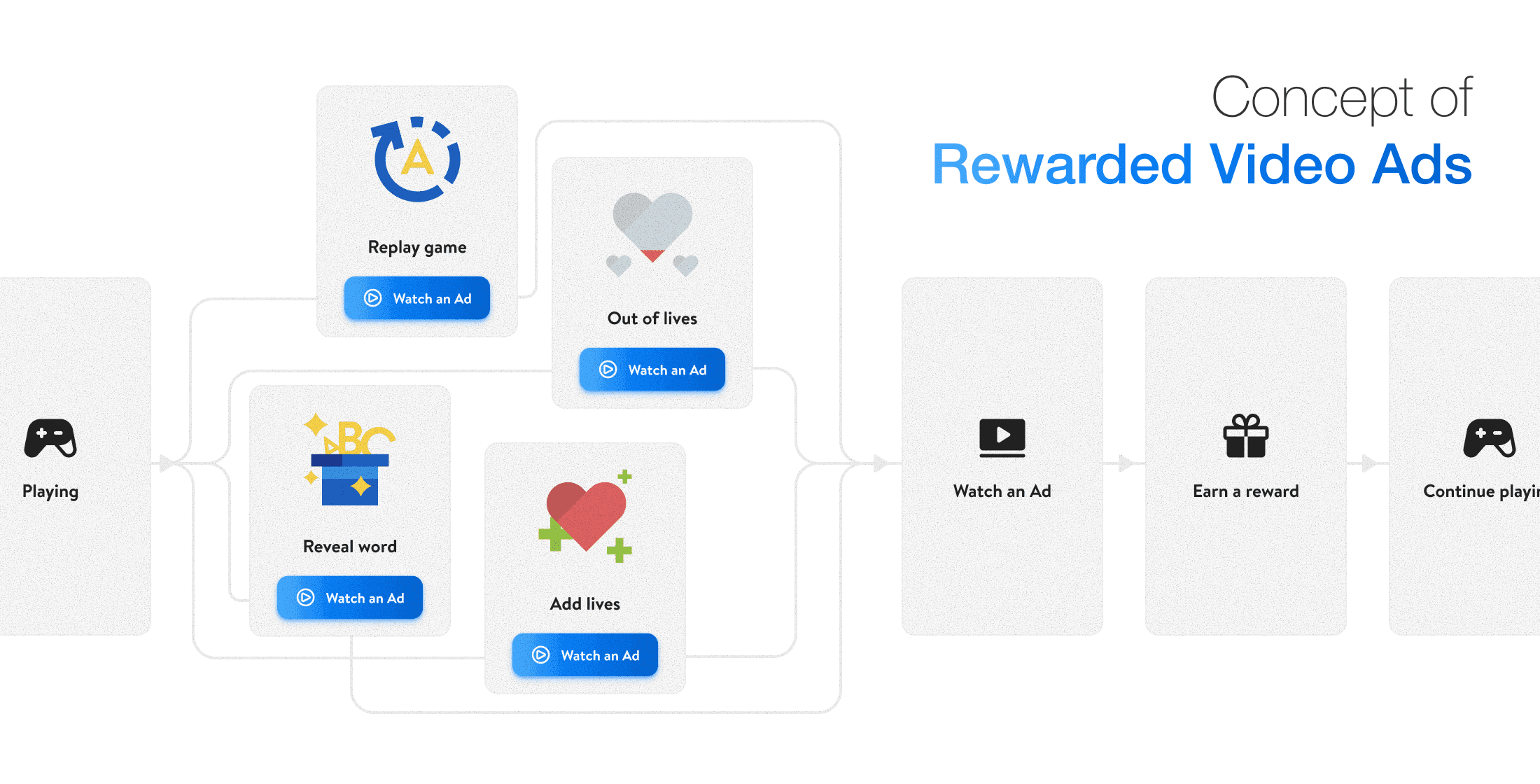
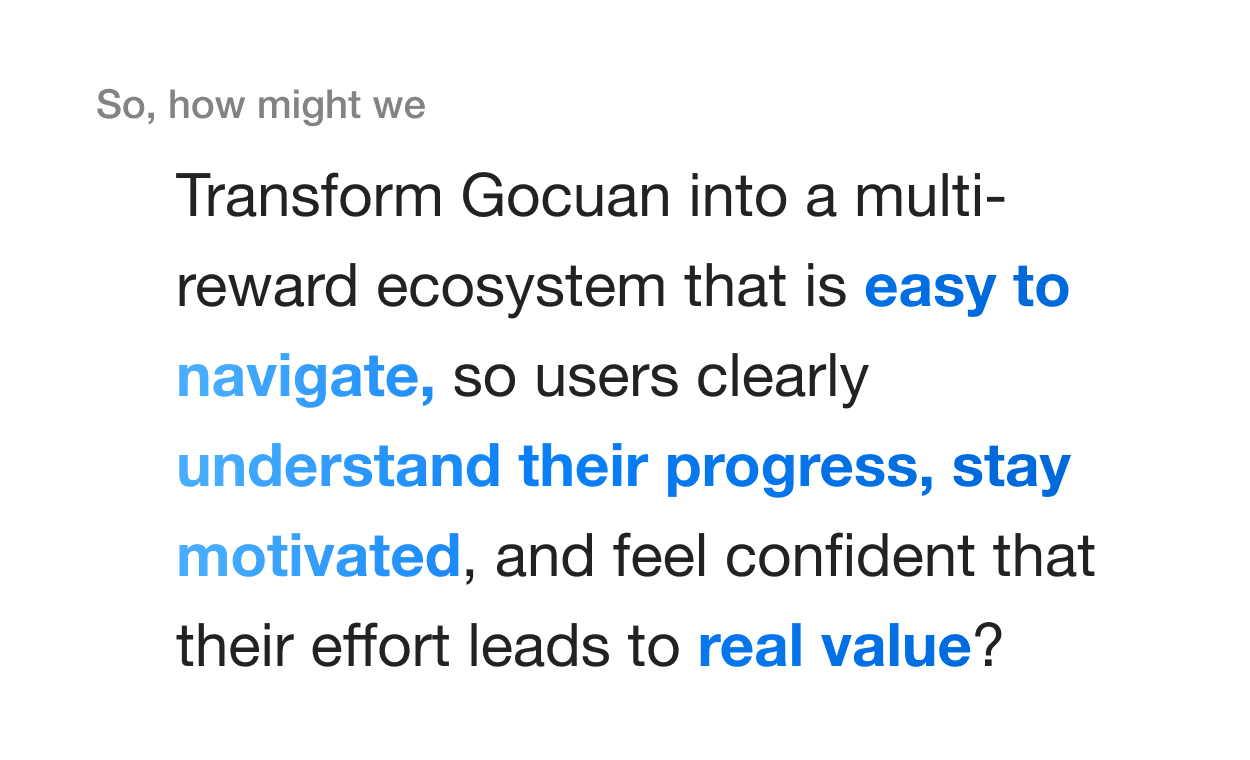
Because of this, users are very sensitive to how much effort they put in compared to what they get in return. When it’s not clear how their time turns into value, motivation drops very quickly.
The old version of the app, Gratisan, had a big challenge in keeping users engaged.
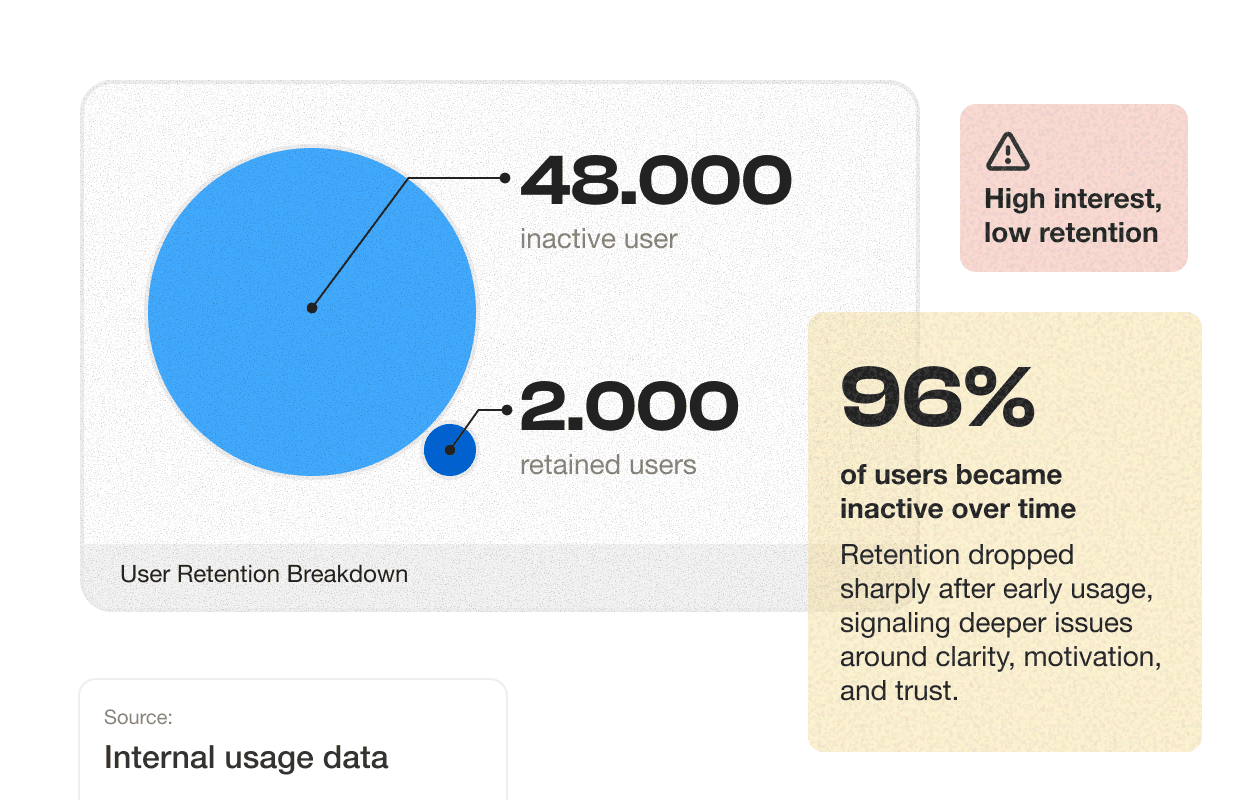
This showed a deeper issue: not with visuals, but with clarity, feedback, and how fair the experience felt to users.
Research inputs came from internal usage data, repeated user complaints, and insights from stakeholders of the existing product.
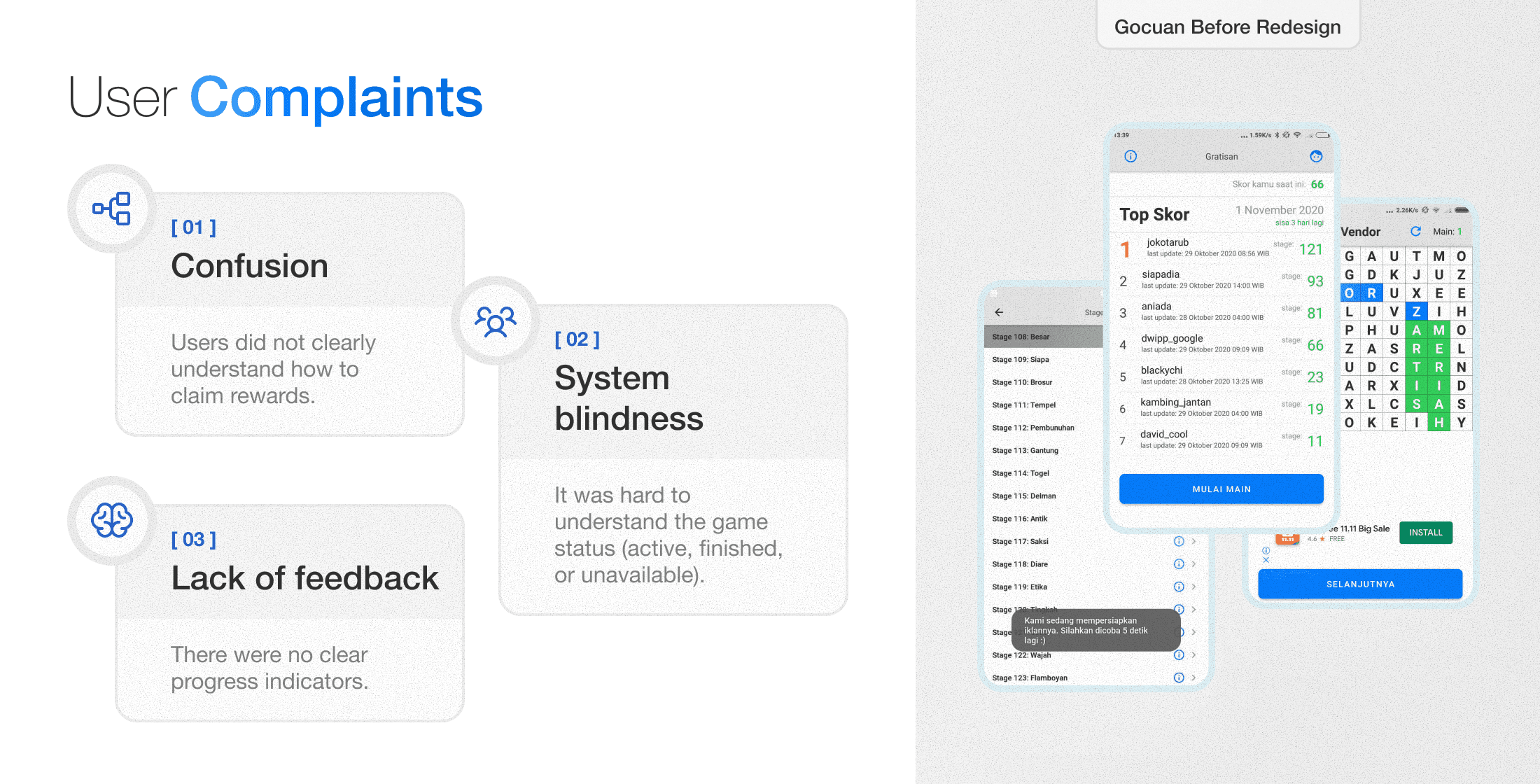
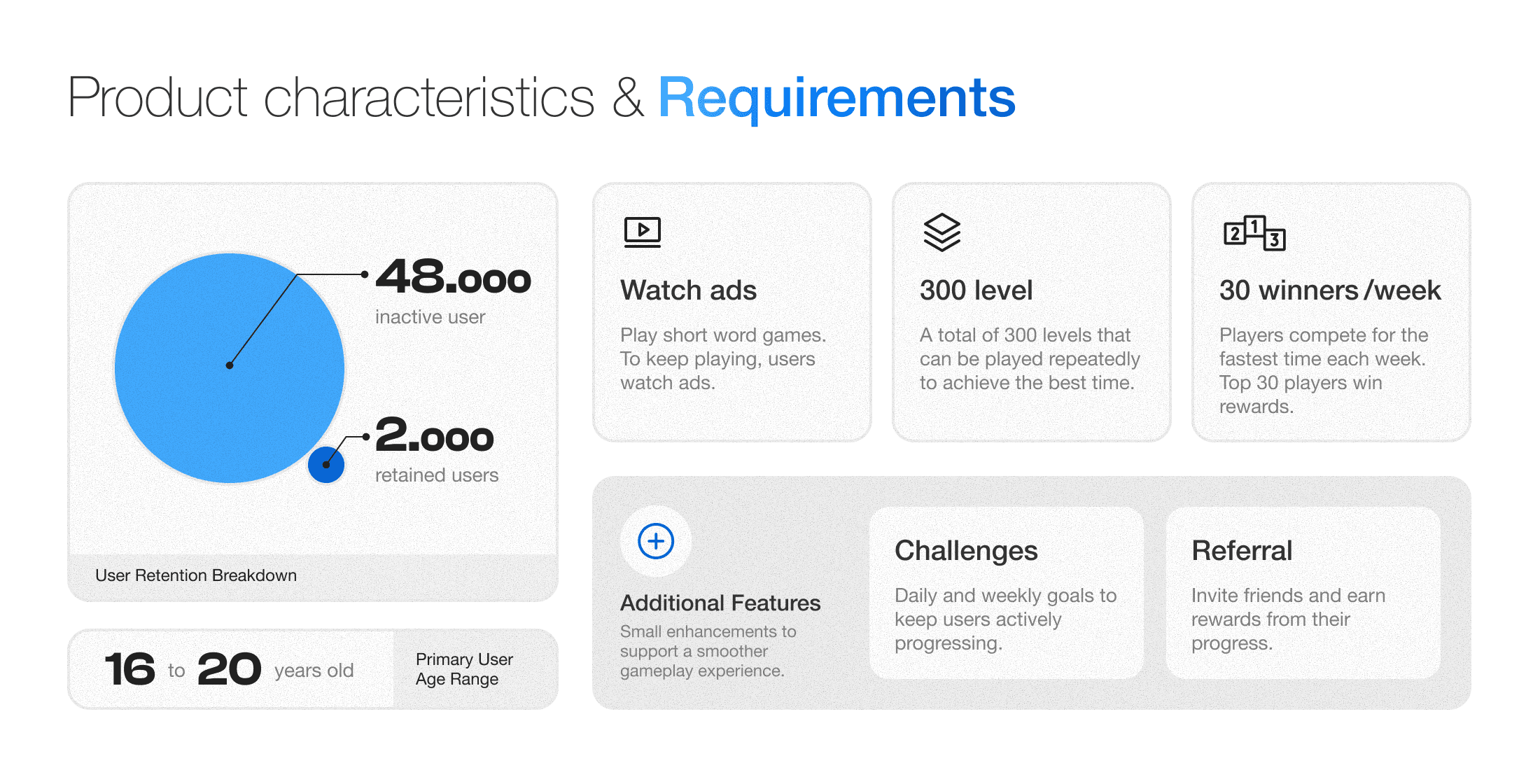
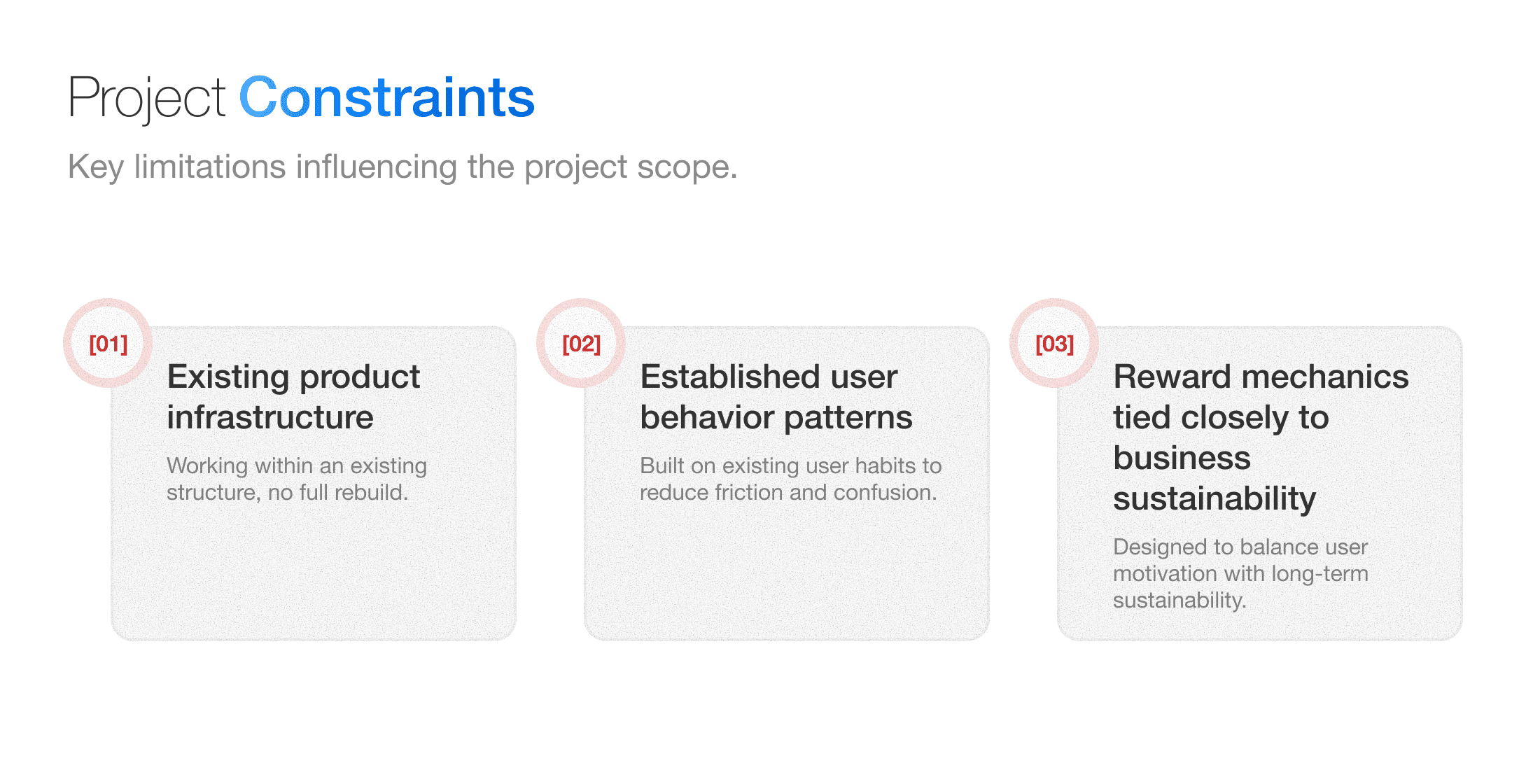
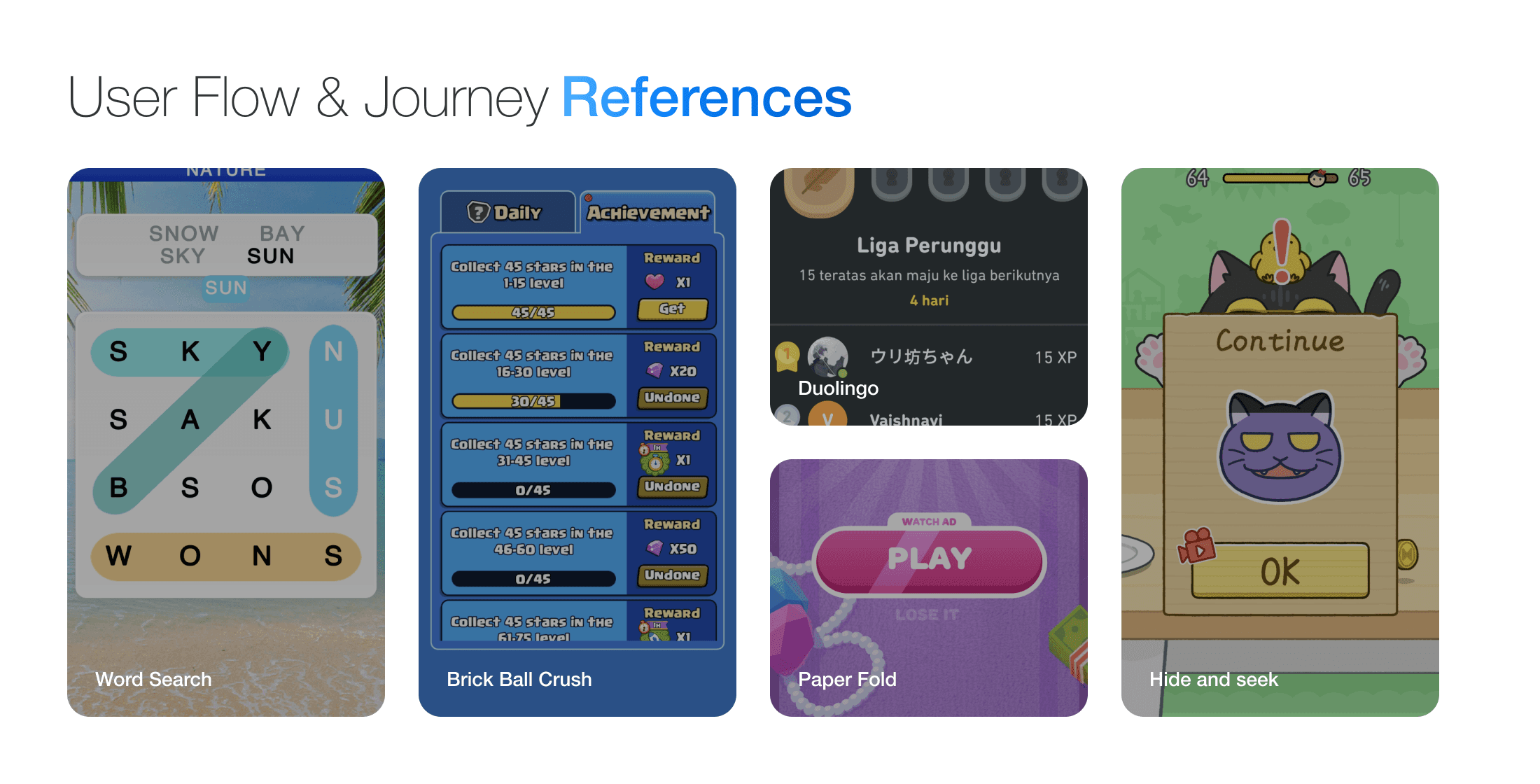
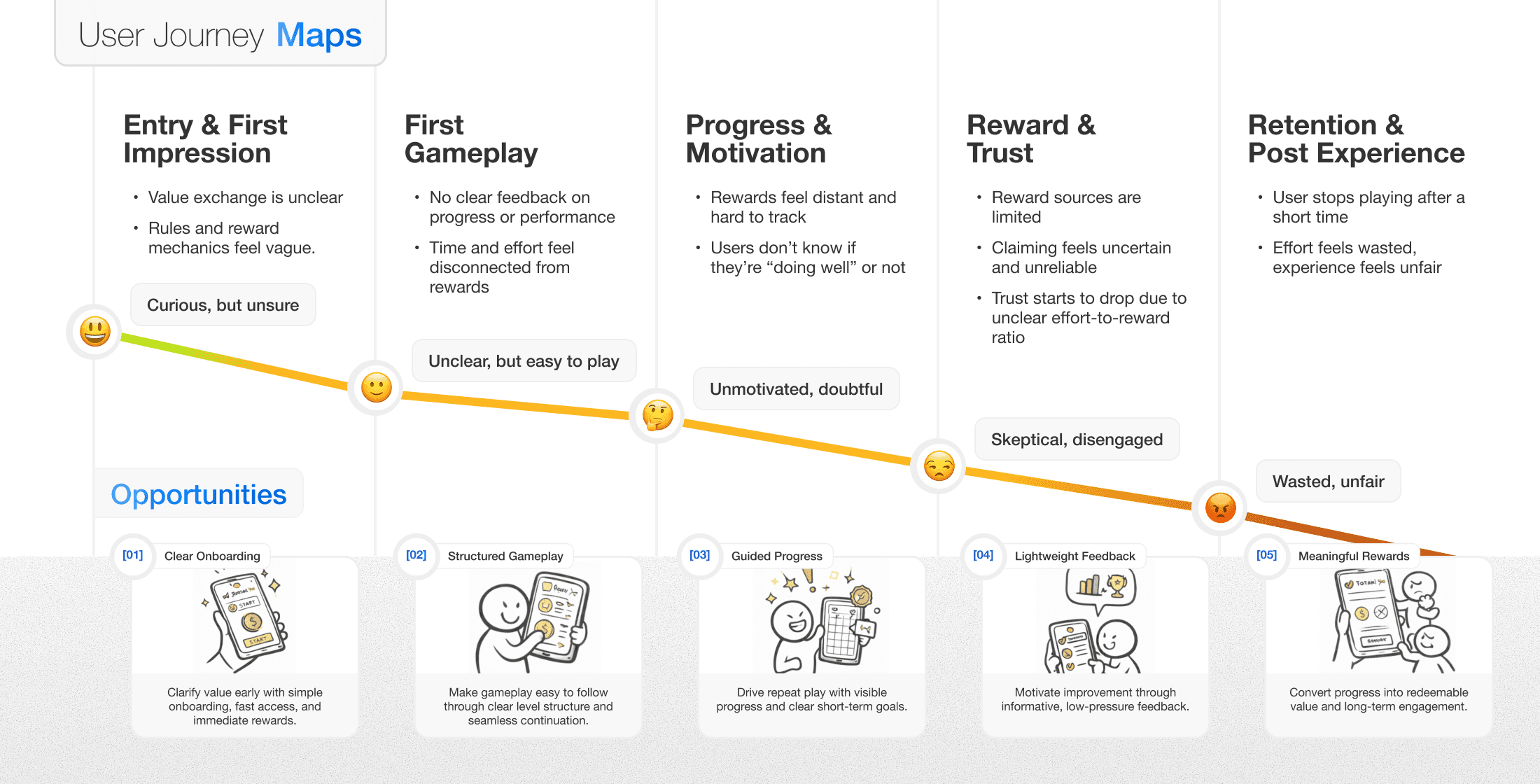
Research showed that low user engagement was caused by behavior and perception issues, not only by visual design. Users stopped playing because they did not understand how close they were to getting rewards and whether their effort really mattered.
This lack of clarity reduced user trust and motivation.
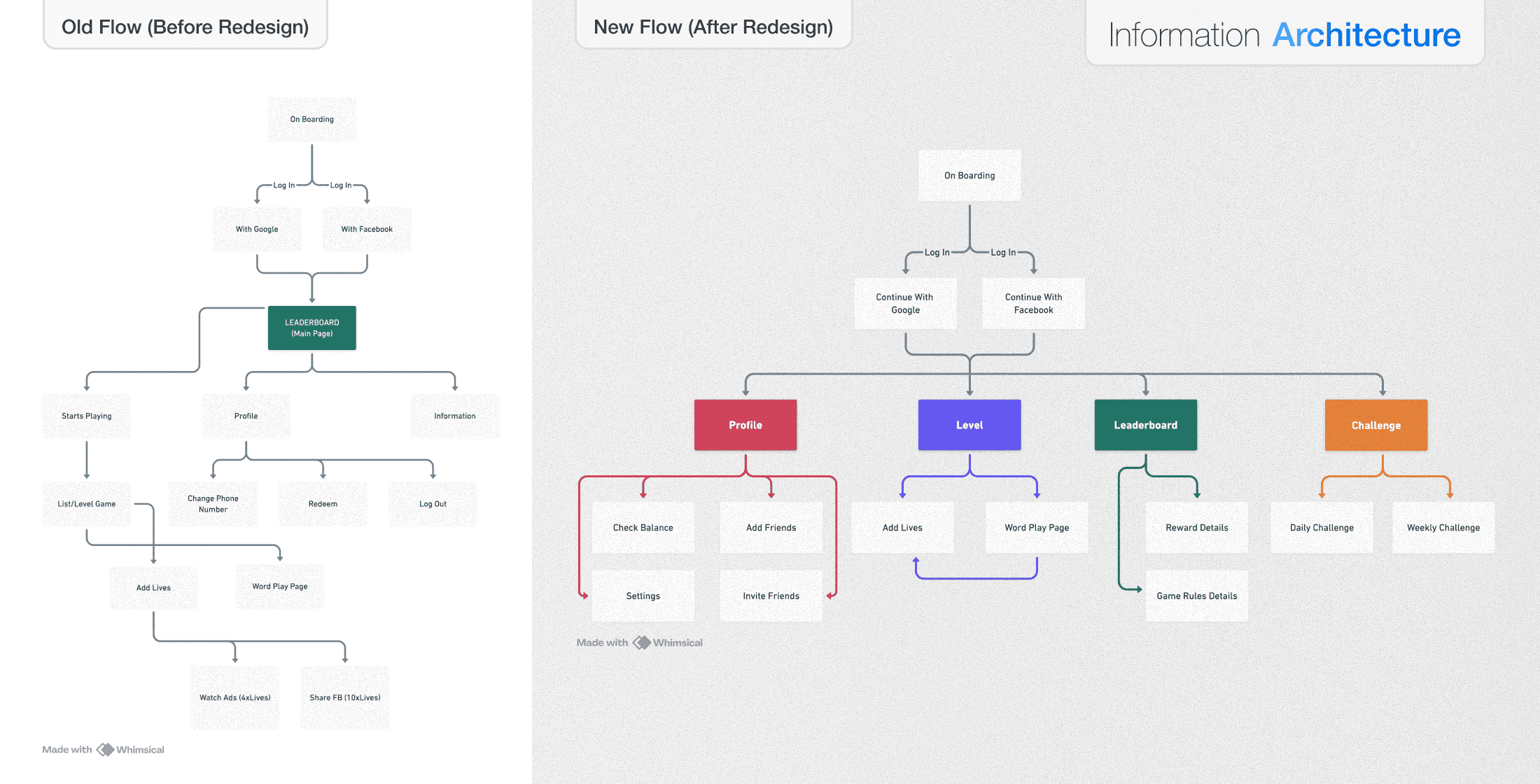
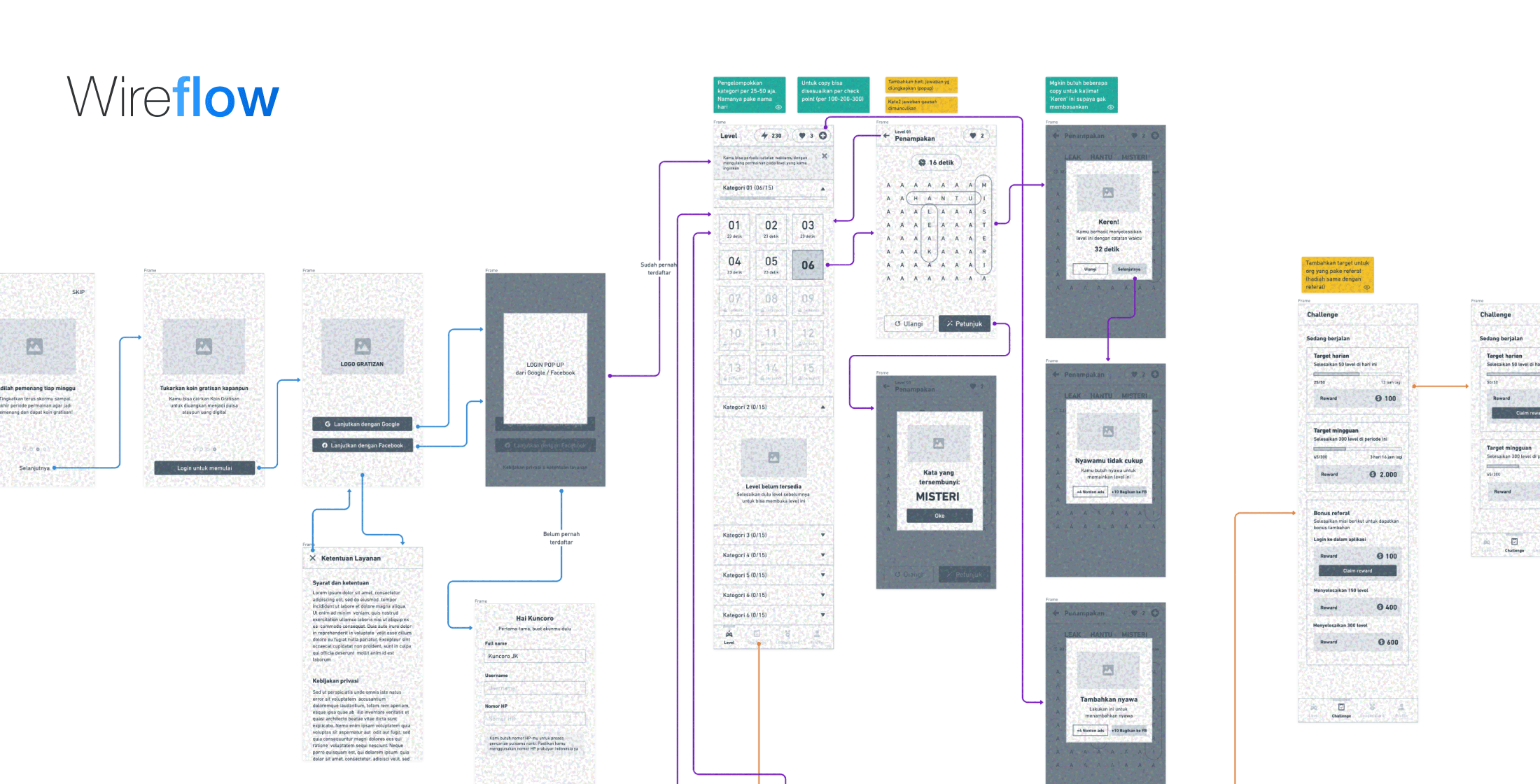
To understand how clarity (or the lack of it) affects user decisions, I mapped the user journey together with the information structure and wireflows. Instead of treating them as separate artifacts, I explored them at the same time to see where users hesitate, lose trust, or drop off before moving into visual design.
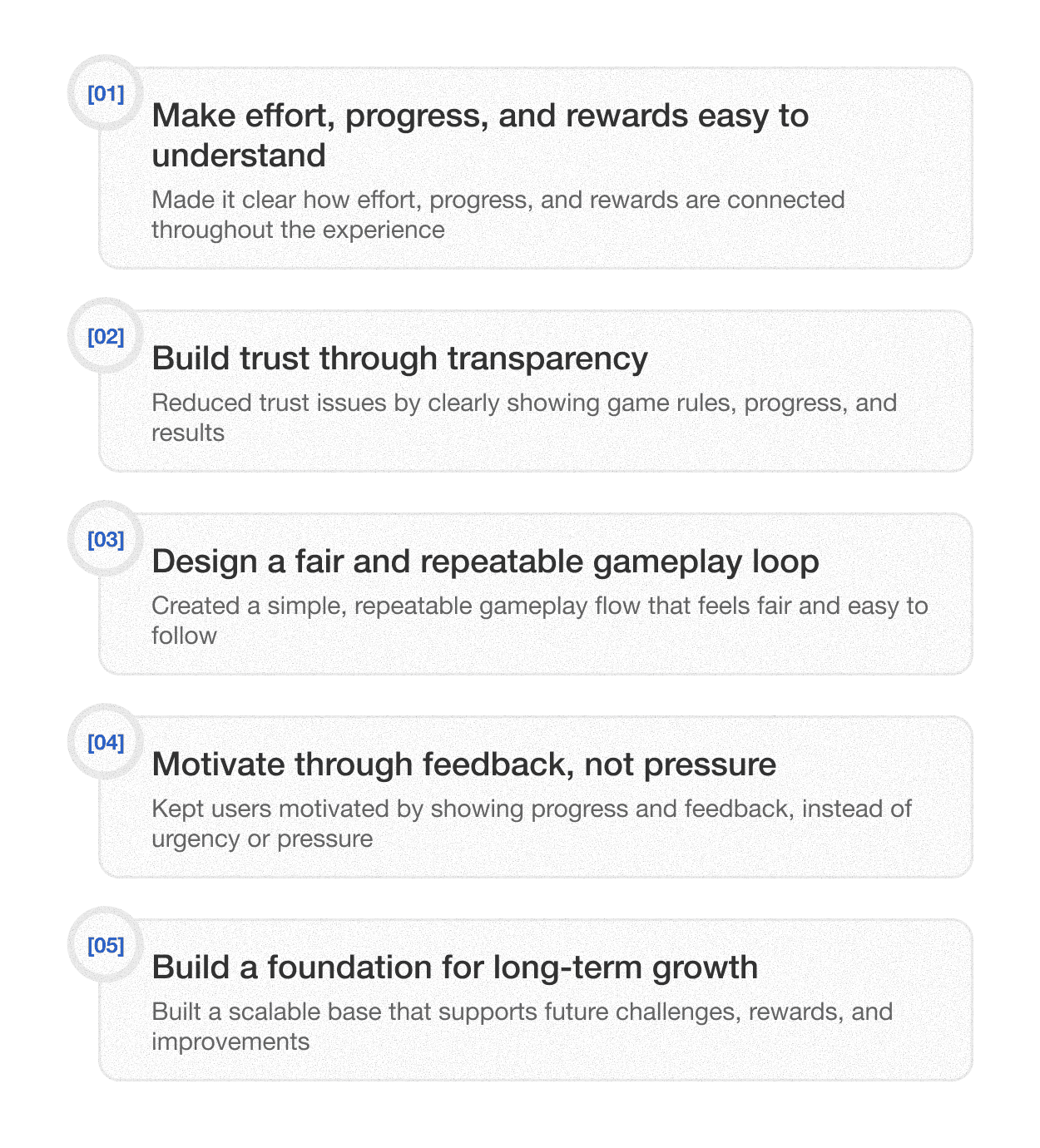
The redesign was guided by a few simple principles focused on reducing friction and making value clear to users:
Before moving into high-fidelity UI, I defined a basic visual language to keep the experience consistent across screens. The goal was to create a system that feels cohesive for users and is also practical for developers to build within existing workflows.
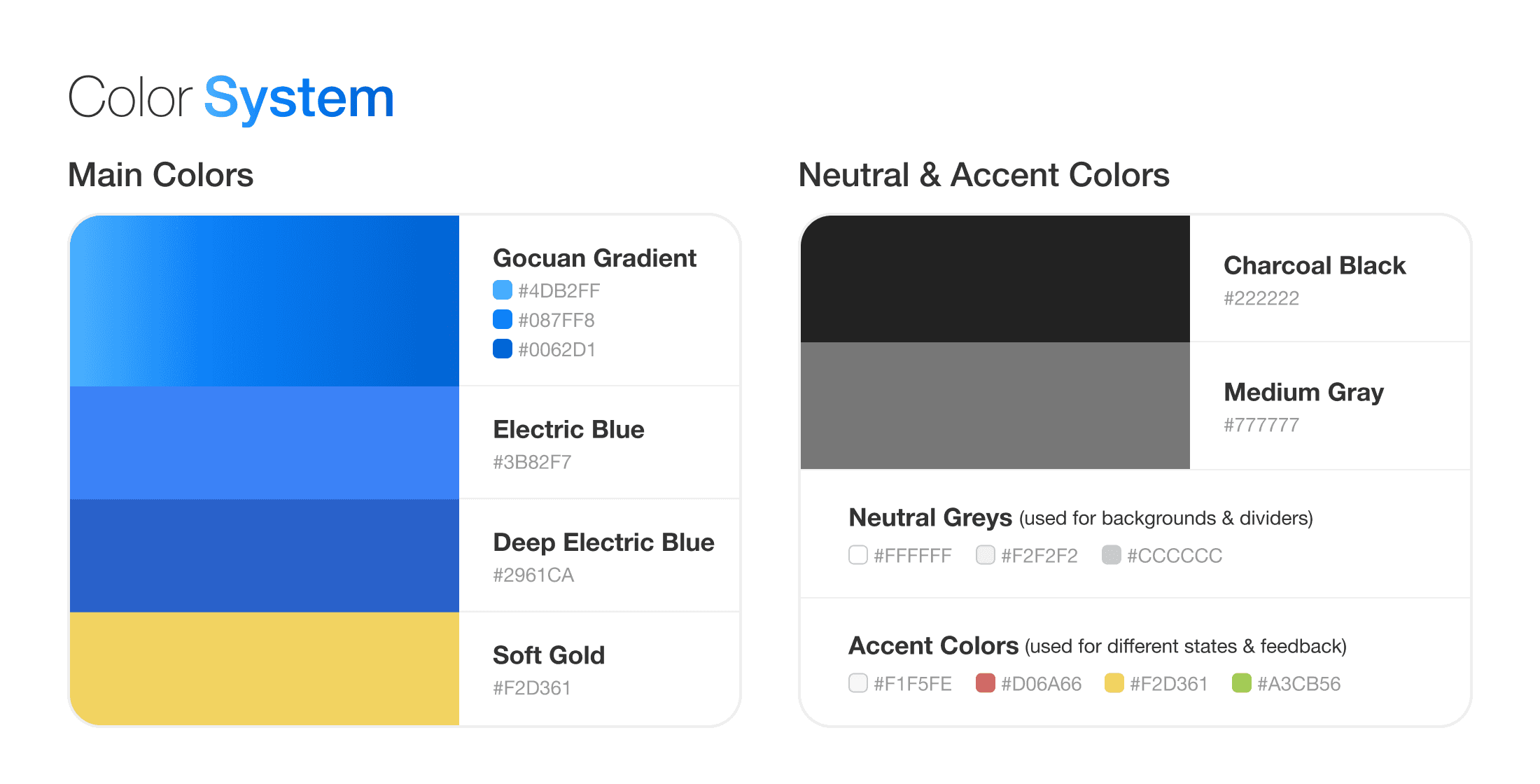
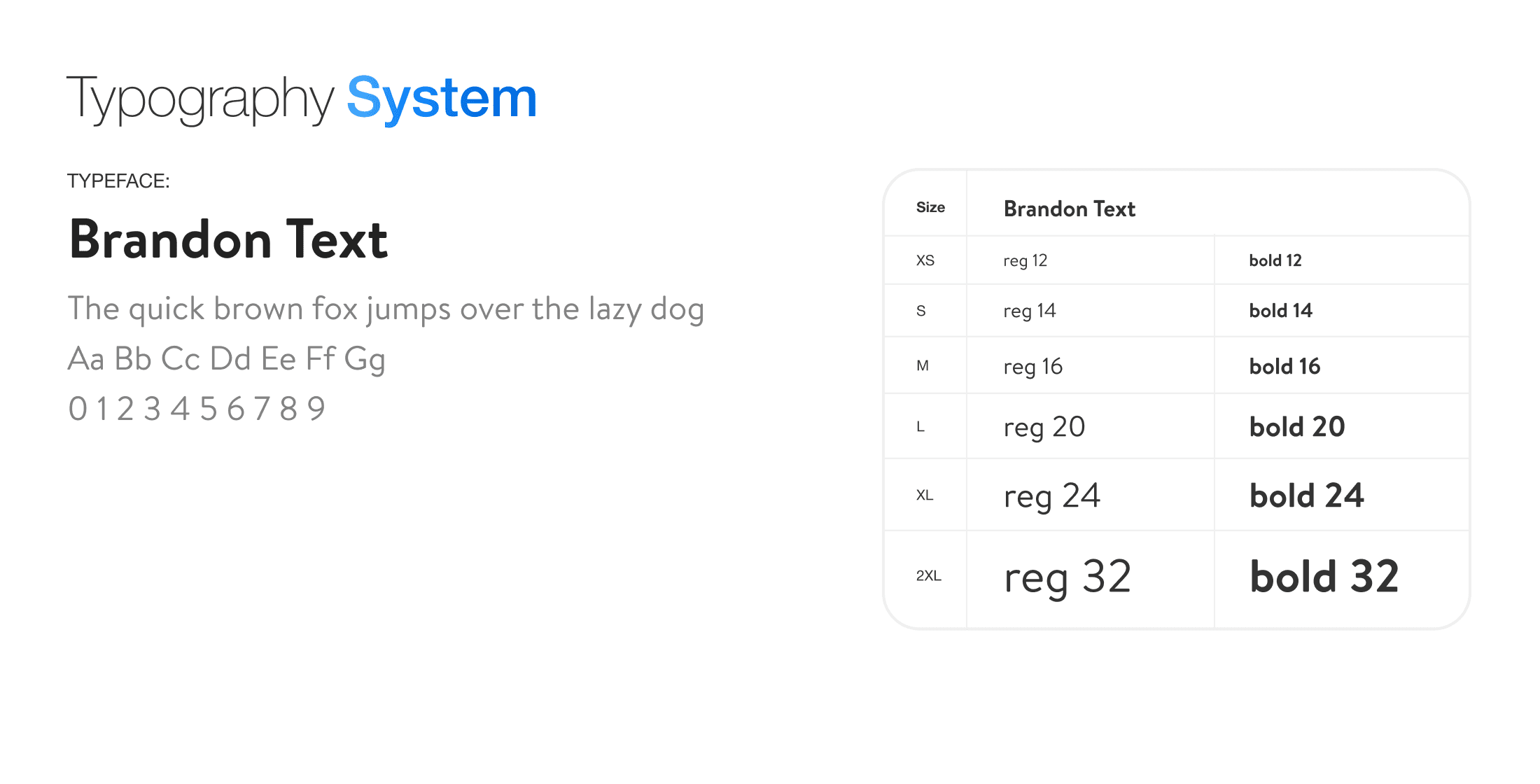
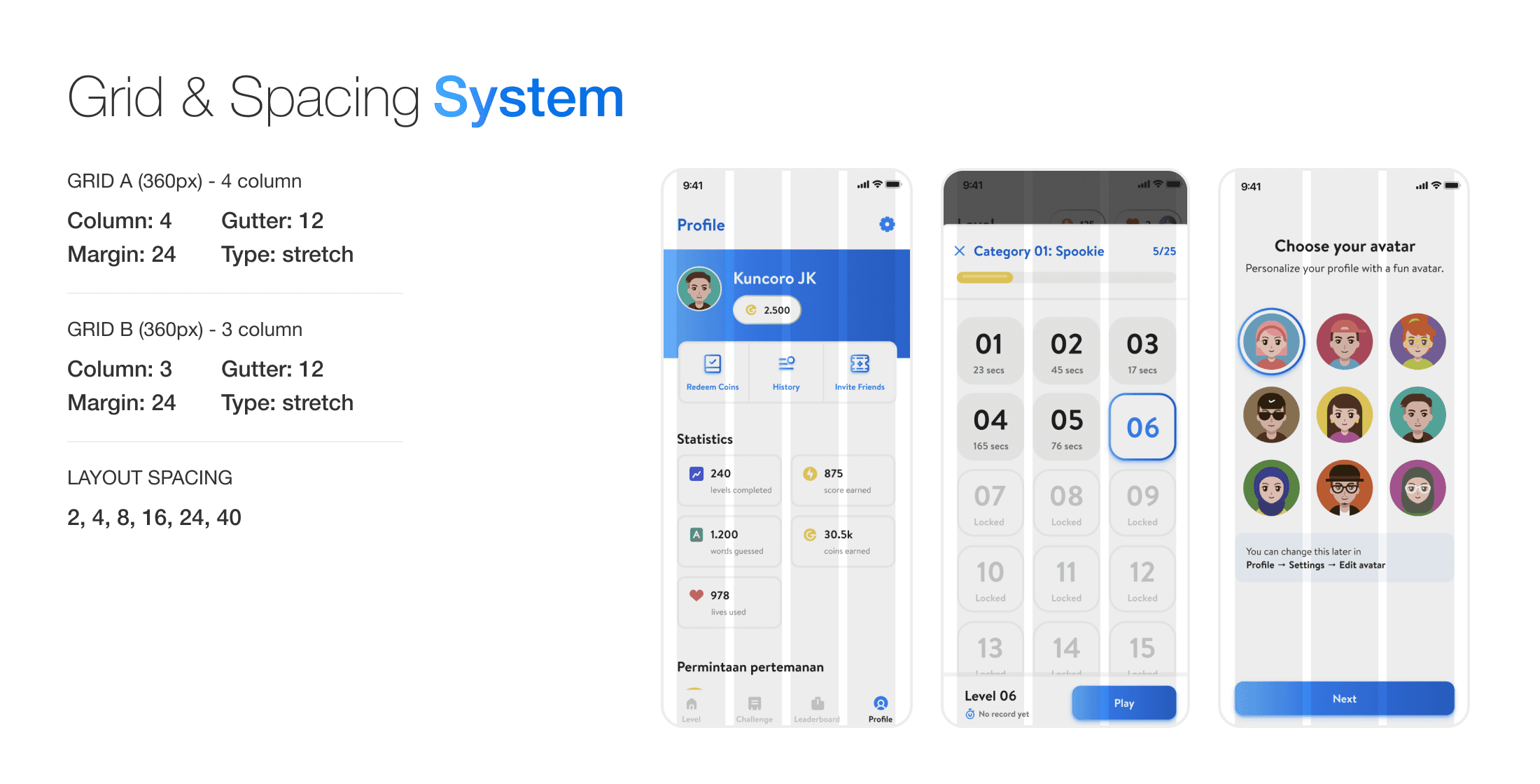
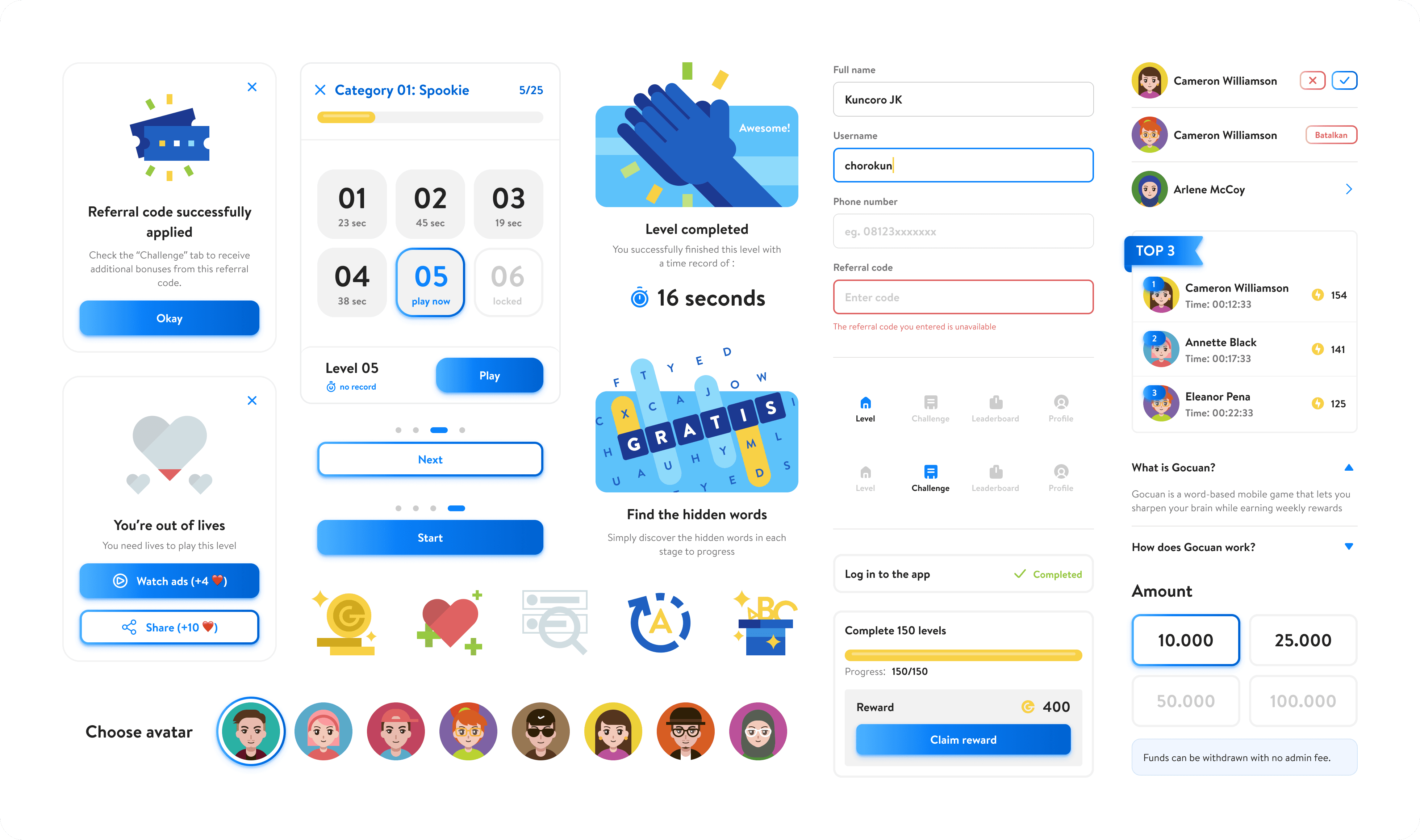
Core UI elements were standardized to keep the interface consistent and easy to scale. Illustrations were used to highlight key game moments, give clear feedback, and make the experience more engaging without adding unnecessary visual noise.
The redesign breaks the experience into four clear stages, each addressing a key trust and motivation gap found in the original product.
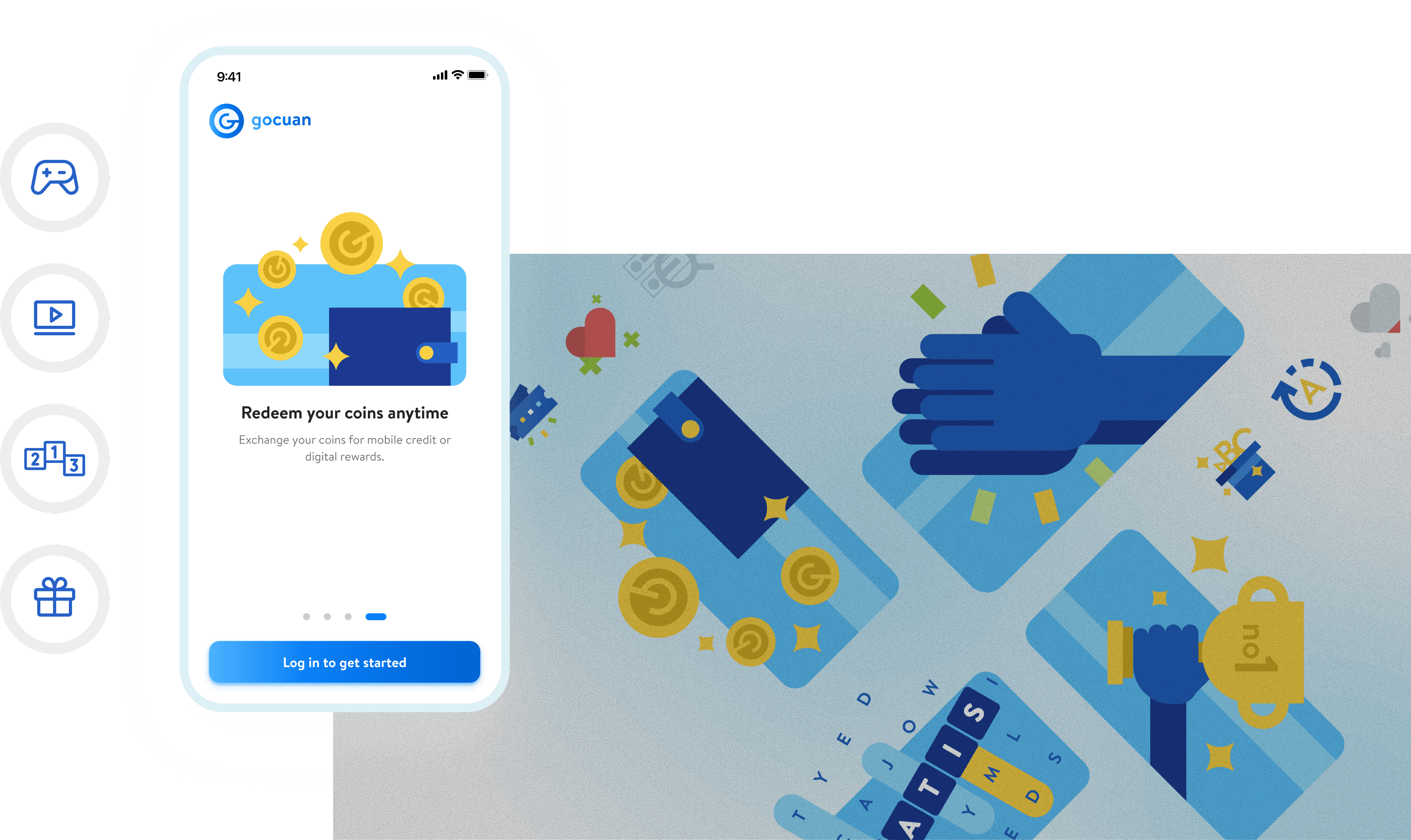
Onboarding was simplified to clearly explain how Gocuan works, how rewards are earned, and why playing is worth the time. Login and registration are fast, with referral rewards creating immediate value.
Levels were designed as the main repeatable action, with clear categories, simple rules, and visible progress indicators. Best-time tracking helps users understand performance, while extra lives can be added seamlessly via ads or sharing without breaking the flow.
Daily and weekly challenges introduce clear short-term goals, while special challenges add variation over time. Progress is always visible, helping users understand what they’re working toward.
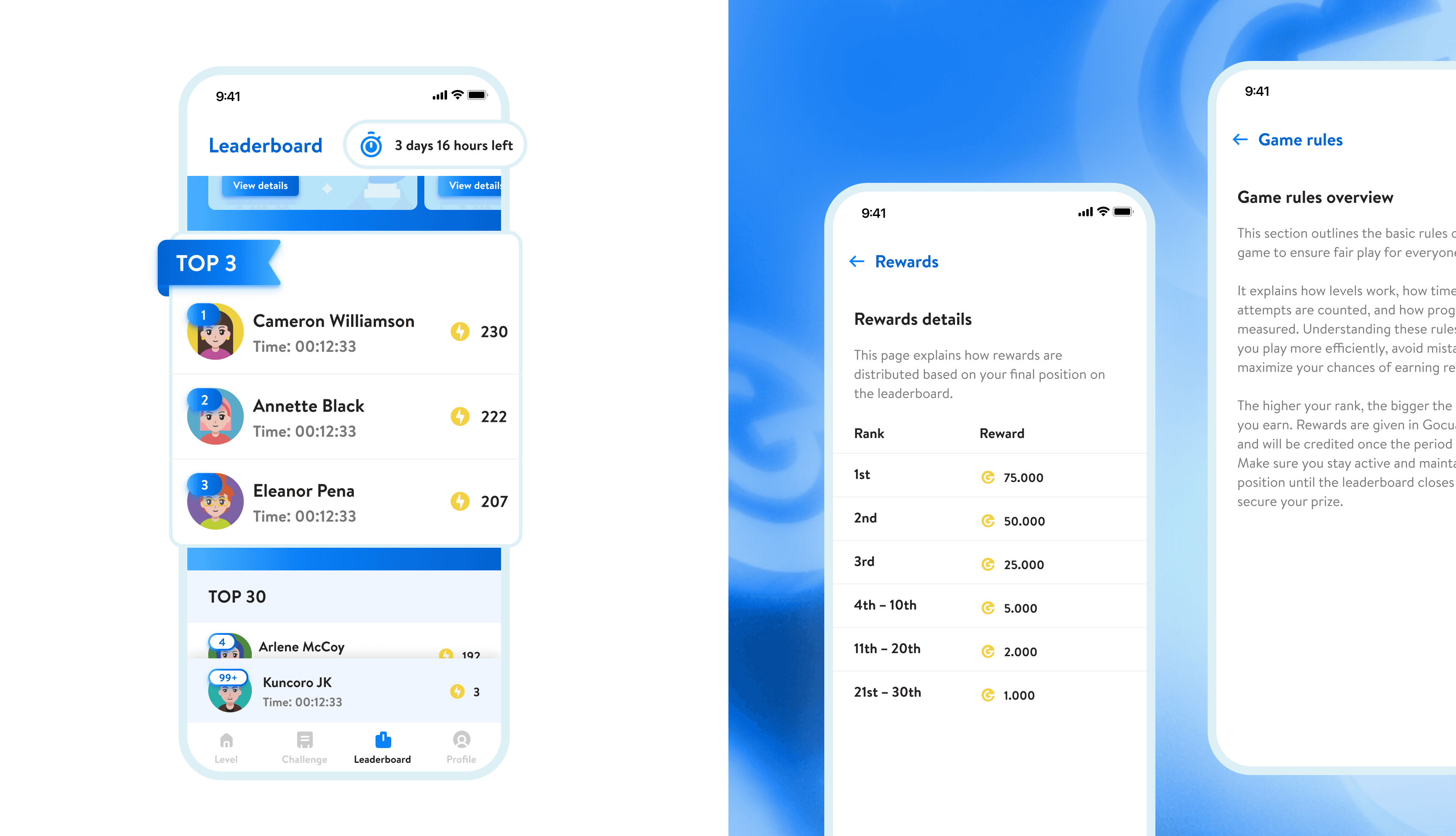
Leaderboards, profiles, rewards, and referrals were unified into a single feedback system. Users can see their performance, track earned rewards, redeem based on preference, and monitor referral progress.
By reframing the website as a confidence-building tool rather than a sales surface, this project focused on reducing hesitation at key decision moments. The outcomes below reflect design intent and early directional impact, not final performance metrics.
This project showed me that hesitation often comes from uncertainty, not a lack of interest. When information is clear and transparent, trust can form naturally without relying on visual polish or pushy prompts.
I also learned that supporting different users doesn’t always require heavy personalization. Sometimes, a clear and thoughtful structure is enough to help people find what matters to them.
Most importantly, good design builds confidence by quietly guiding decisions, not by pushing users to act.